





What's Happening?
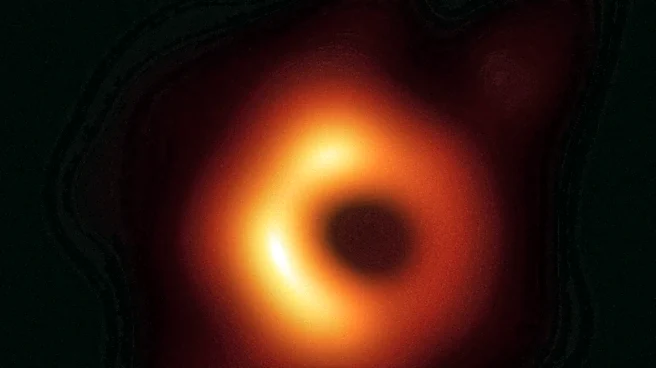
The UNIST Observational Astrophysics Group is actively engaged in cutting-edge research concerning black holes, utilizing advanced observational techniques and facilities worldwide. Their work focuses on three primary areas: direct imaging of nearby supermassive
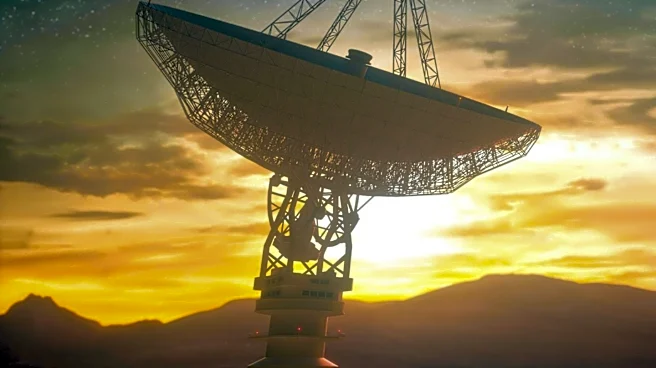
black holes, multi-wavelength and multi-messenger black hole astrophysics, and the discovery and investigation of distant, faint, and small black holes. Through direct imaging, they aim to understand mass inflow and outflow under extreme gravity by observing matter and magnetic field distributions around cosmic black holes at event horizon scales. This involves using facilities like the Event Horizon Telescope (EHT) and the Global Millimeter VLBI Array to study systems such as M87 and Sgr A*. In multi-messenger astrophysics, the group analyzes time-variable signals, including photons and particles like neutrinos, from black hole vicinities to develop new models for energy generation and transfer mechanisms. They combine VLBI imaging and polarimetry with long-term monitoring across the electromagnetic spectrum to pinpoint where particles are accelerated in blazar jets and identify neutrino-producing black holes. Furthermore, they employ wide-field surveys with SKA pathfinders to discover new types of active and inactive black holes, including candidate intermediate-mass black holes in dwarf galaxies and early universe black holes, utilizing machine learning to process vast datasets.
Why It's Important?
This research is crucial for advancing humanity's understanding of the universe's most extreme objects and fundamental physics. By directly imaging the regions around black holes, scientists can gain unprecedented insights into how matter behaves under immense gravitational forces, which has implications for general relativity and accretion disk theory. The multi-messenger approach, combining observations from various parts of the electromagnetic spectrum with particle detection, offers a more complete picture of high-energy astrophysical phenomena, such as blazar flares and neutrino production. This can help unravel the mysteries of cosmic ray origins and the mechanisms driving powerful jets from active galactic nuclei. The search for distant, faint, and small black holes, including those from the early universe, is vital for understanding the formation and evolution of galaxies and the growth of supermassive black holes over cosmic time. These discoveries could shed light on the 'seeds' of the first supermassive black holes and provide critical data for future large-scale observatories like the Square Kilometre Array, ultimately refining cosmological models and our place in the cosmos.
What's Next?
The UNIST Observational Astrophysics Group is preparing for the next generation of observational facilities and techniques. They are looking ahead to an expanded EHT, enhanced Korean millimeter-VLBI facilities, and the development of space-based millimeter VLBI, such as the proposed Black Hole Explorer. The group is also actively preparing for the Square Kilometre Array (SKA) in the 2030s, which is expected to significantly increase the number of detectable black holes. Their work involves writing observing proposals, conducting observations, and processing data, with students participating in every stage from observation to publication. They are developing their own tools to address limitations in existing methods, particularly in VLBI calibration, imaging, and polarimetry. Future research will continue to focus on comparing observational data with theoretical models of accretion flows, jets, and particle acceleration to refine physical interpretations. The ongoing collaborative research with international and domestic organizations in Europe, the U.S., and Asia will be essential for leveraging global radio astronomical, VLBI, and space-based observations of cosmic black holes.
Beyond the Headlines
The pursuit of understanding black holes extends beyond mere scientific curiosity; it touches upon fundamental questions about the nature of space, time, and gravity. The ability to directly image the event horizon, the point of no return for light, provides empirical data to test Einstein's theory of general relativity in extreme conditions. Discrepancies, if found, could lead to revolutionary new physics. The multi-messenger approach, integrating data from light, neutrinos, and potentially gravitational waves, represents a paradigm shift in astronomy, allowing for a more holistic understanding of cosmic events that are otherwise invisible. This interdisciplinary approach fosters global scientific collaboration, pushing the boundaries of technological innovation in data processing, imaging, and telescope design. The long-term implications of this research could include a deeper comprehension of the universe's origins, the distribution of matter, and the ultimate fate of galaxies, influencing not only astrophysics but also inspiring future generations of scientists and engineers.