

What's Happening?
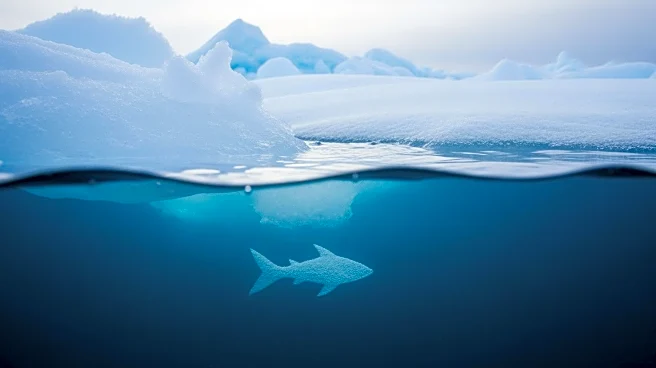
A recent study published in Nature Communications highlights the challenges faced by polar cod due to climate change. As the Arctic warms, sea ice is melting earlier, increasing underwater light levels by 75% to 160% by 2100. This shift affects the timing
of plankton blooms, leading to food shortages during the summer when polar cod require the most nourishment. The study, led by Trond Kristiansen at the Fallaron Institute in California, uses climate models to predict these changes in the Barents, Chukchi, and Bering Seas. The increased light and earlier ice melt disrupt the natural balance, making it difficult for polar cod to find suitable habitats and sufficient food.
Why It's Important?
The findings underscore the broader ecological impact of climate change on Arctic marine life. Polar cod play a crucial role in the Arctic food web, serving as a primary food source for birds and whales. Their decline could have cascading effects on the entire ecosystem. As southern species move northward, they may outcompete native species like polar cod, further altering the Arctic's ecological balance. This shift could impact commercial fisheries and indigenous communities that rely on these species for sustenance and economic activities.
What's Next?
The study suggests that polar cod may struggle to adapt by moving northward due to limited food availability in deeper Arctic waters. As the Arctic continues to warm, monitoring these changes will be crucial for developing conservation strategies. Policymakers and environmental groups may need to consider measures to protect vulnerable species and manage the influx of southern species. The potential for significant ecological shifts highlights the need for international cooperation in addressing climate change impacts on Arctic ecosystems.
Beyond the Headlines
The study raises ethical and cultural considerations, particularly for indigenous communities whose livelihoods are intertwined with the Arctic's natural resources. The loss of polar cod could disrupt traditional practices and food security. Additionally, the research highlights the importance of understanding the interconnectedness of global ecosystems and the far-reaching impacts of climate change. As the Arctic environment transforms, it serves as a stark reminder of the urgent need for comprehensive climate action.