
What's Happening?
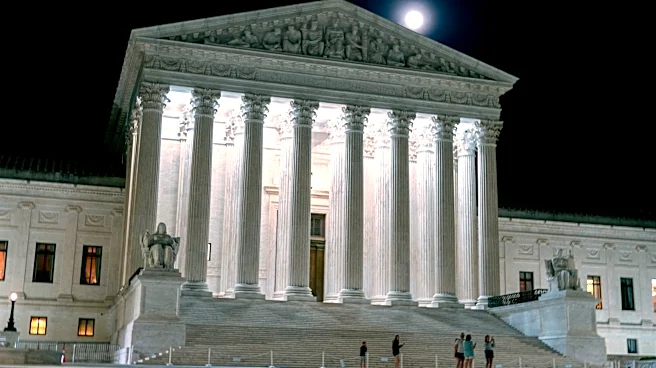
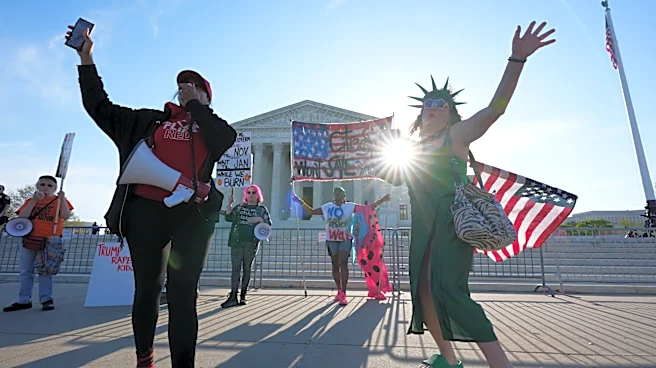
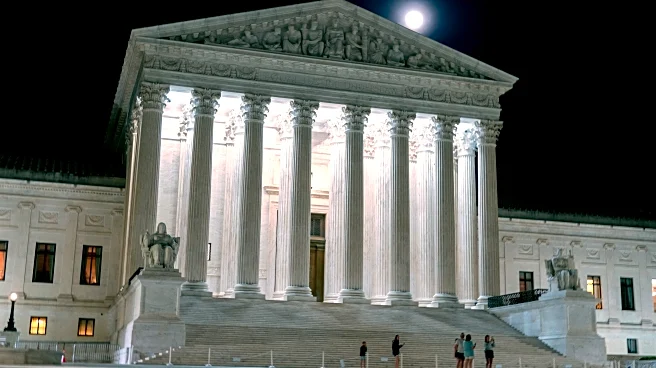
The Supreme Court appears ready to reject President Trump's executive order limiting birthright citizenship. During oral arguments, conservative and liberal justices questioned the constitutionality of Trump's order, which seeks to deny citizenship to children
born in the U.S. to parents who are in the country illegally or temporarily. The case, Trump v. Barbara, is significant for educators, as it could affect the legal status of U.S.-born children and their access to public education. Justice Neil Gorsuch, a Trump appointee, expressed skepticism about the administration's reliance on the 1898 Wong Kim Ark case to support the order. The court's decision is expected by early summer.
Why It's Important?
The Supreme Court's decision on birthright citizenship could have far-reaching implications for immigration policy and public education in the U.S. If upheld, Trump's order could lead to a significant number of U.S.-born children lacking legal status, impacting their access to education and other services. The case tests the limits of executive power and challenges long-standing interpretations of the 14th Amendment. A ruling against the order would reinforce the constitutional guarantee of citizenship for all children born on U.S. soil, regardless of their parents' immigration status.
What's Next?
A definitive ruling from the Supreme Court is expected by early summer. If the court strikes down Trump's order, it could set a precedent for future immigration-related cases and policies. The decision may also influence public opinion and political discourse on immigration reform. Stakeholders, including educators and immigrant advocacy groups, are closely monitoring the case's outcome.