
What's Happening?
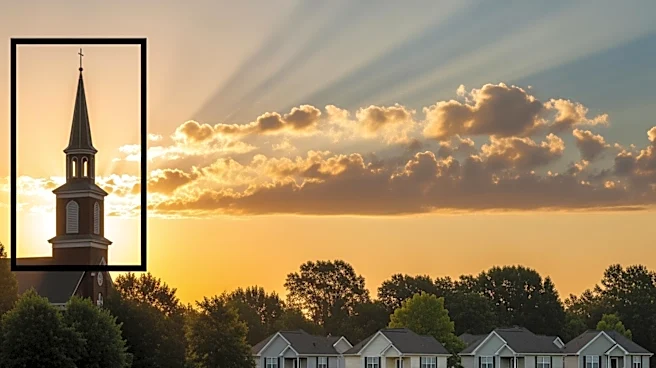
A new initiative called 'Yes in God's Backyard' (YIGBY) is gaining momentum among church leaders in Connecticut and across the United States. This movement encourages faith-based organizations to utilize
their surplus land for affordable housing projects. Religious groups collectively own over 2.6 million acres in the U.S., much of which is underutilized. The initiative aims to address the housing shortage by potentially supporting up to 800,000 new homes. In Connecticut, lawmakers are considering House Bill 5396, which would streamline the approval process for affordable housing developments on religious land. This bill proposes a 'summary review' process, allowing projects that meet local zoning requirements to be approved without public hearings, provided at least 30% of the units are designated as affordable. The bill has passed the Planning and Development Committee and awaits further action in the House and Senate.
Why It's Important?
The YIGBY initiative represents a significant opportunity to alleviate the housing crisis by leveraging underused land owned by religious organizations. With housing affordability being a critical issue, especially in states like Connecticut where the median listing price is nearly $500,000, this initiative could provide much-needed relief. The bill could simplify the complex zoning process, making it easier for religious groups to contribute to community housing needs. However, the proposal has sparked debate, with some opponents concerned about potential preferential treatment for religious organizations and the impact on local governance. Supporters argue that the initiative is a creative solution to the housing crisis, offering a practical way to increase affordable housing availability.
What's Next?
The future of the YIGBY initiative hinges on the passage of House Bill 5396. If approved, it could set a precedent for other states to follow, potentially unlocking significant land resources for affordable housing nationwide. The bill's progress will be closely watched by stakeholders, including religious organizations, housing advocates, and local governments. The debate over the bill highlights the ongoing tension between state-level mandates and local decision-making in addressing housing issues. The outcome could influence future policy decisions and the role of faith-based organizations in community development.