





What's Happening?
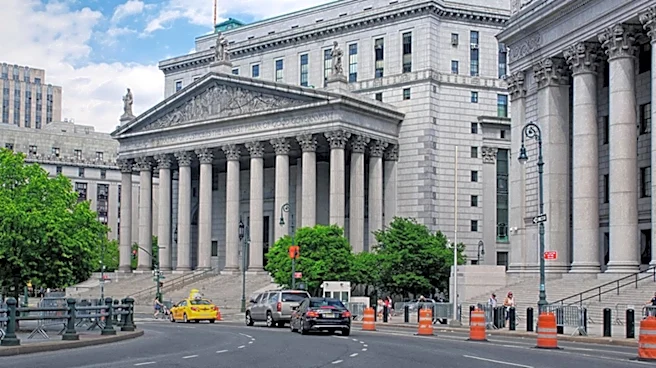
A federal appeals court has rejected President Trump's administration's attempt to impose a $100,000 fee on new H-1B visas for highly skilled foreign workers. The Boston-based first US circuit court of appeals upheld a lower court's decision from June,
which was challenged by 20 Democratic state attorneys general. The court ruled that the fee constituted an unlawful tax that Congress had not authorized. The three-judge panel, consisting of appointees from Democratic presidents, determined that the Trump administration did not demonstrate a likelihood of success in its appeal. The H-1B visa program, which is crucial for tech companies to hire foreign workers, offers 65,000 visas annually, with an additional 20,000 for workers with advanced degrees. The fee does not apply to foreign citizens already in the US on student visas, who represent a significant portion of new H-1B recipients.
Why It's Important?
The court's decision is significant as it maintains the status quo for the H-1B visa program, which is vital for many US tech companies that rely on foreign talent. The proposed fee by President Trump was seen as a deterrent to hiring foreign workers, potentially impacting the competitiveness of US businesses in the global market. By blocking the fee, the court has ensured that companies can continue to access skilled labor without the additional financial burden. This decision also highlights the ongoing legal and political battles over immigration policies, reflecting broader debates about the balance between protecting American jobs and fostering economic growth through skilled immigration.
What's Next?
The Trump administration may consider further legal actions or policy adjustments in response to the court's decision. Meanwhile, tech companies and other stakeholders will likely continue to monitor developments closely, as changes to the H-1B visa program can significantly affect their operations. The administration's stance on immigration and visa policies remains a contentious issue, with potential implications for future legislative or executive actions. Stakeholders may also engage in advocacy efforts to influence policy decisions that impact the availability and cost of skilled foreign labor.