








What's Happening?
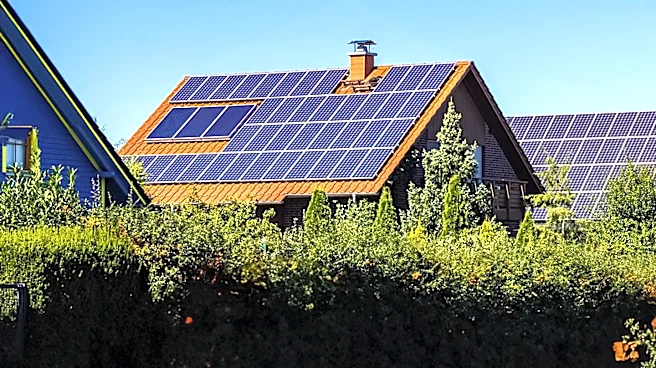
Hungary is preparing a comprehensive plan to modernize homes with clean energy upgrades, offering grants and subsidized loans that could cover up to 95% of renovation costs. This initiative, outlined by István Kapitány of Hungary's Ministry of Economy
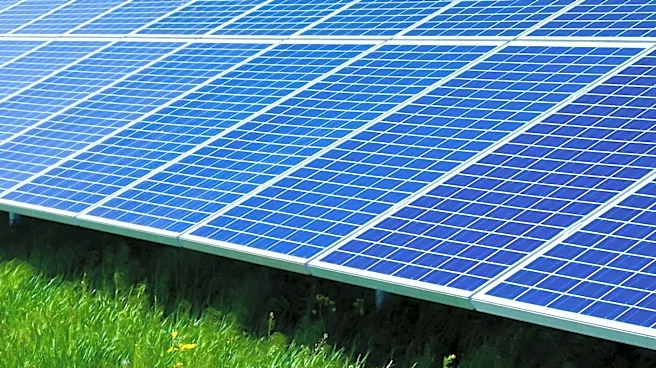
and Energy, is part of the country's 2027 budget and aims to span multiple years with a total cost of 600 billion Hungarian forints ($1.83 billion). The program targets 15,000 single-family homes and 15,000 condominiums annually, potentially reaching 120,000 families by the end of the decade. Eligible upgrades include solar photovoltaic systems and heat pumps, among nine other activities, suggesting a focus on broader efficiency renovations. Support for single-family homes would be capped at 15.5 million forints ($47,273), while condominiums would have a lower ceiling of 5.2 million forints ($15,860). The Hungarian Solar Cell Solar Collector Association noted that new solar connections would be subject to gross billing, emphasizing the value of self-consumption for homeowners.
Why It's Important?
While this initiative is specific to Hungary, it reflects a broader European trend towards incentivizing household clean energy adoption, which could influence U.S. policy discussions on energy independence and climate change. The emphasis on high subsidy rates (up to 95%) and interest-subsidized loans could serve as a model for other nations looking to accelerate their energy transitions. For U.S. industries, particularly those involved in solar technology, heat pump manufacturing, and energy storage, such programs in Europe represent a growing market and potential for technological exchange. The focus on self-consumption due to gross billing also highlights a critical aspect of grid integration for renewable energy, a challenge and opportunity for U.S. utilities and homeowners alike. The success or challenges faced by Hungary's program could provide valuable insights for U.S. policymakers considering similar large-scale residential energy upgrade initiatives.
What's Next?
Hungary is expected to finalize the details of this multi-year program within its 2027 budget. The implementation will likely involve a phased rollout, with annual goals for single-family homes and condominiums. The Hungarian Solar Cell Solar Collector Association's analysis suggests that the program will prioritize upgrades that enhance self-consumption, potentially leading to increased demand for home energy storage solutions. Other European countries, such as Bosnia and Herzegovina and Austria, have already launched similar grant programs, indicating a regional commitment to clean energy. The EU's national escape clause for solar, heat pumps, and batteries through 2028 provides a supportive regulatory environment for such initiatives. The U.S. will likely observe the outcomes of these European programs to inform its own future energy policies and incentives.
Beyond the Headlines
This Hungarian initiative underscores a significant shift in how governments are approaching residential energy consumption and climate goals. By offering substantial financial incentives, Hungary is not just promoting clean energy but also aiming to improve energy security and reduce reliance on traditional energy sources. The focus on self-consumption through gross billing could lead to innovations in home energy management systems and smart grid technologies. This approach also raises questions about the long-term financial sustainability of such high subsidy rates and their impact on national budgets. Furthermore, the program's success could set a precedent for other nations, including the U.S., to consider more aggressive and comprehensive financial support mechanisms for household clean energy transitions, potentially accelerating the global move towards a decarbonized economy.