




What's Happening?
The Education Freedom Tax Credit (EFTC), part of the One Big Beautiful Bill Act passed in 2025, is set to allow parents, including those with high incomes, to send their children to private schools using federal tax credits. This initiative is expected
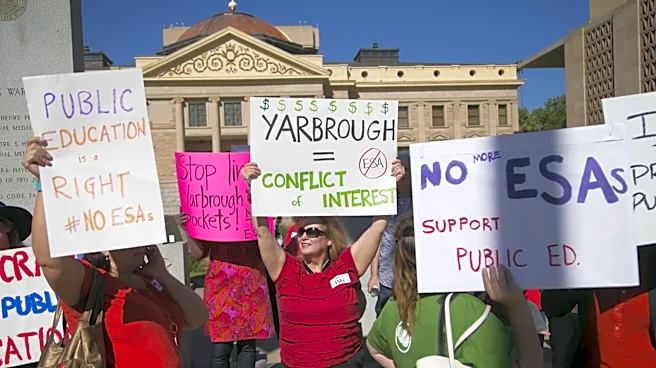
to impact approximately 18 million school-aged children across the United States. The EFTC funds are sourced from donations that are reimbursed by federal tax credits, effectively diverting money that would have otherwise been paid to the federal government. Critics argue that this move will siphon funds away from public schools, which are already struggling with fixed costs and declining enrollments. The program is similar to existing state programs in North Carolina and Arizona, where a significant portion of the funds have been used by families who were already sending their children to private schools.
Why It's Important?
The introduction of the EFTC could significantly alter the landscape of educational funding in the U.S. by redirecting resources from public to private education. This shift may exacerbate existing inequalities, as public schools, particularly those in low-income areas, could face further financial strain. Proponents argue that the EFTC provides an opportunity for parents to choose better educational options for their children, potentially improving educational outcomes. However, opponents warn that the policy could undermine public education systems, leaving them with fewer resources to support students who remain, particularly those with special needs. The broader impact on educational equity and public school viability remains a contentious issue.
What's Next?
As the EFTC is implemented, public schools may need to adjust to reduced funding, potentially leading to staff reductions and program cuts. The policy is likely to face legal and political challenges from educators and public school advocates who argue it undermines public education. Monitoring the impact on enrollment patterns and educational outcomes will be crucial in assessing the long-term effects of the EFTC. Additionally, the policy could become a focal point in upcoming political debates, influencing future educational reforms and funding decisions.