






What's Happening?
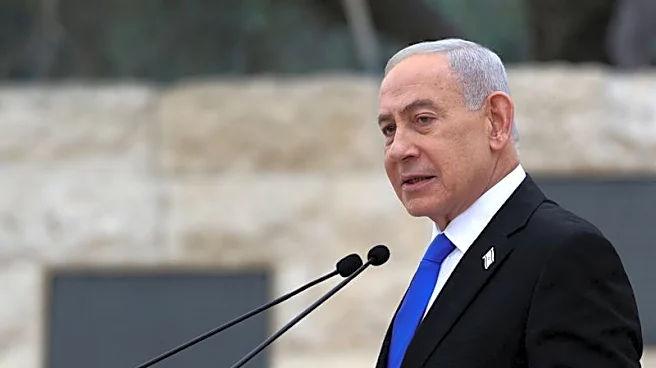
Former Israeli Prime Minister Ehud Barak has criticized current Prime Minister Benjamin Netanyahu's approach to Iran, describing it as unrealistic. In an interview, Barak referred to a meeting between Netanyahu and U.S. President Trump, where Netanyahu reportedly
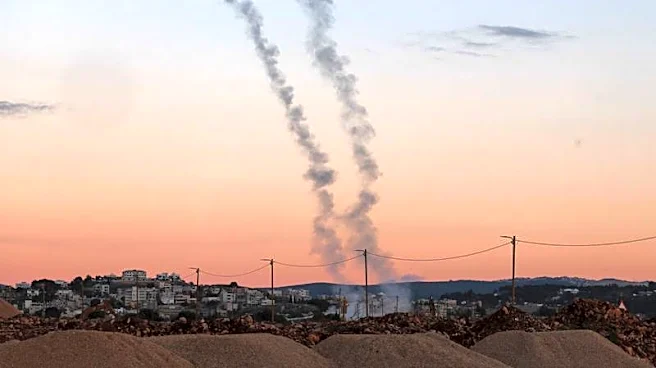
suggested that military action could lead to the collapse of the Iranian regime. Barak dismissed these claims, arguing that such expectations are far from reality. He highlighted that despite some military achievements, key strategic objectives remain unachieved, with Hezbollah and Hamas still posing significant threats. Barak also warned that Israel's military actions in Gaza, Lebanon, and Syria are causing diplomatic friction with regional allies like Egypt and Jordan. He expressed concerns about Netanyahu's rhetoric and the potential for election interference, suggesting that Netanyahu might manipulate events to maintain power.
Why It's Important?
Barak's critique underscores the potential diplomatic and security challenges facing Israel. His comments suggest that Netanyahu's strategies could strain relationships with key regional allies, potentially isolating Israel diplomatically. The emphasis on unachieved strategic goals highlights ongoing security threats from groups like Hezbollah and Hamas, which could impact regional stability. Barak's warnings about election interference and the use of advanced technologies like deepfakes raise concerns about the integrity of Israel's democratic processes. These issues could have broader implications for U.S.-Israel relations, especially if diplomatic tensions escalate or if election integrity is compromised.
What's Next?
Barak's warnings suggest potential political and security developments in Israel. If Netanyahu's strategies continue to alienate regional allies, Israel may face increased diplomatic isolation. The possibility of election interference and the use of deepfakes could lead to significant challenges in maintaining public trust in the electoral process. If Barak's predictions about election manipulation come true, it could lead to political instability and civil unrest. The international community, including the U.S., may need to monitor these developments closely, as they could impact regional security and diplomatic relations.
Beyond the Headlines
Barak's critique also highlights the ethical and legal dimensions of using military strategies and advanced technologies in political contexts. The potential use of deepfakes to influence elections raises questions about the ethical implications of technology in democratic processes. Additionally, the possibility of manipulating events to maintain political power touches on legal and ethical concerns regarding governance and the rule of law. These issues could prompt broader discussions about the role of technology in politics and the importance of safeguarding democratic institutions.