



What's Happening?
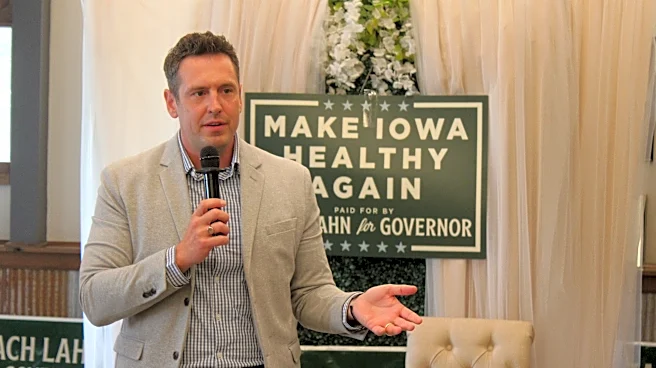
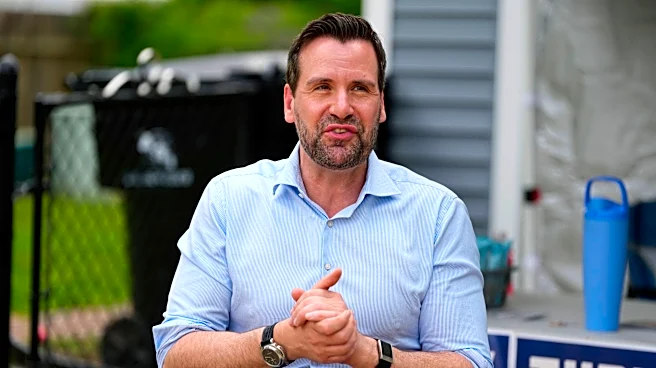
In a surprising turn of events, Republican U.S. Representative Randy Feenstra lost the Iowa gubernatorial primary to Zach Lahn, despite receiving a last-minute endorsement from President Trump. The primary race highlighted divisions within the Republican Party
in Iowa, with Lahn running on an 'Iowa First' and Make America Healthy Again platform, while Feenstra presented a more traditional conservative approach. The outcome is seen as a rare defeat for a Trump-backed candidate and sets the stage for Iowa's first open-seat governor's race in nearly two decades, as current Governor Kim Reynolds is not seeking reelection.
Why It's Important?
The result of the Iowa gubernatorial primary is significant as it reflects the shifting dynamics within the Republican Party. The victory of Zach Lahn, who ran on a MAGA-style platform, suggests a growing preference among Republican voters for outsider candidates over traditional conservatives. This could influence the party's strategy in upcoming elections, particularly as they aim to retain control of key political offices in Iowa. The outcome also underscores the limitations of President Trump's influence in certain races, potentially signaling a shift in the political landscape as the party navigates a post-Trump era.
What's Next?
With the primary concluded, attention now turns to the general election, where Zach Lahn will face Democratic candidate Rob Sand. The race is expected to be closely contested, with both parties vying for control of the governor's office. Additionally, the Republican Party will focus on retaining the U.S. Senate seat being vacated by Senator Joni Ernst. Economic issues, particularly those affecting the agricultural sector, are likely to play a significant role in the campaigns, as both parties seek to address the concerns of Iowa voters.