









What's Happening?
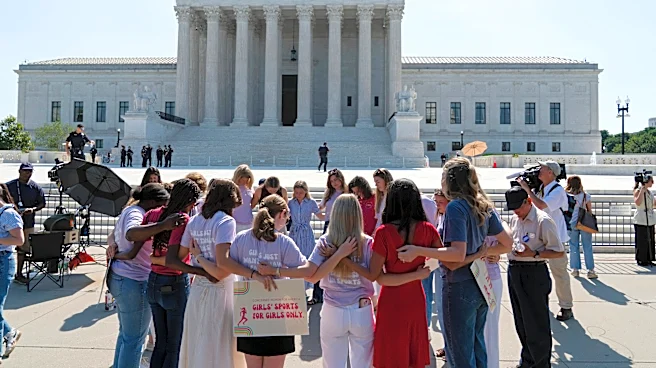
The U.S. Supreme Court has invalidated a 2023 Hawai'i state law that required gun owners to obtain permission before carrying concealed weapons onto private properties open to the public, such as malls and gas stations. This ruling, which deems the law unconstitutional,
shifts the responsibility of regulating gun presence to private property owners, who must now post signs if they wish to prohibit firearms. The decision has sparked debate, with proponents arguing it upholds Second Amendment rights and enhances self-defense capabilities, while opponents, like Janet Carter from Everytown Law, cite research suggesting that more guns in public spaces could lead to increased violence and deter public demonstrations. The ruling also affects similar laws in other states.
Why It's Important?
This Supreme Court ruling has significant implications for gun control and public safety in Hawai'i and potentially other states with similar laws. By allowing more guns in public spaces, the decision could lead to increased firearm presence in crowded areas, raising concerns about public safety and the potential for violence. The ruling empowers private property owners to make decisions about gun presence, which could lead to varied enforcement and public confusion. Additionally, the decision may influence future legal challenges to gun regulations, potentially reshaping the landscape of gun control laws across the United States.
What's Next?
Following the Supreme Court's decision, private property owners in Hawai'i will need to decide whether to allow or prohibit firearms on their premises, potentially leading to a patchwork of regulations. Legal experts anticipate further lawsuits aimed at challenging and potentially dismantling additional gun regulations in Hawai'i. The ruling may also prompt legislative responses at the state level as lawmakers seek to balance Second Amendment rights with public safety concerns. Stakeholders, including gun rights advocates and gun control proponents, are likely to continue their advocacy efforts in response to this landmark decision.