








What's Happening?
The U.S. Nuclear Regulatory Commission (NRC) has issued a construction permit for the Long Mott Generating Station in Calhoun County, Texas. This marks the first construction permit for a high-temperature gas-cooled reactor (HTGR) in nearly 60 years.
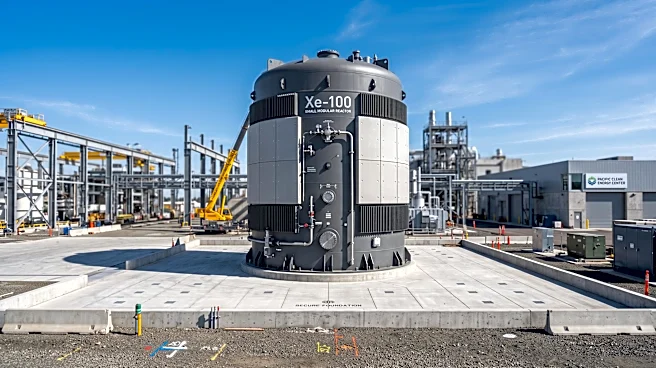
The facility, developed by Long Mott Energy, a subsidiary of Dow, will feature four Xe-100 small modular reactors (SMRs) designed by X-energy. The primary purpose of the 320 MWe facility is to supply high-temperature steam for industrial processes at Dow's Seadrift Operations site, with any surplus electricity being exported to the grid. This approval is the third advanced reactor construction permit issued by the NRC in 2026 and the first for a multi-module advanced reactor facility. The Xe-100 reactors utilize helium as a coolant and graphite pebbles containing tri-structural isotropic (TRISO) fuel particles, allowing for online refueling.
Why It's Important?
This permit represents a significant advancement for nuclear energy in the U.S., particularly for industrial applications. By providing high-temperature steam, the Long Mott facility can help energy-intensive manufacturing operations reduce their reliance on fossil fuels, contributing to decarbonization efforts. The approval of a pebble-bed reactor design and online refueling capabilities also signifies a shift in regulatory approaches, demonstrating the NRC's ability to evaluate and license innovative nuclear technologies. This project, supported by the U.S. Department of Energy’s Advanced Reactor Demonstration Program, could pave the way for more advanced nuclear facilities at industrial sites across the country, offering a stable and low-carbon energy source for critical industries.
What's Next?
While the construction permit has been issued, a separate operating license will be required before the Long Mott Generating Station can begin operations. X-energy and Dow anticipate the reactors could start running as early as the early 2030s. The successful deployment of this project could serve as a model for future advanced nuclear reactor installations, potentially accelerating the adoption of SMRs and HTGRs in the U.S. industrial sector. The project's progress will likely be closely watched by other industries seeking to reduce their carbon footprint and secure reliable energy supplies.
Beyond the Headlines
The approval of the Long Mott Generating Station highlights a broader trend towards integrating nuclear energy directly into industrial processes, moving beyond its traditional role solely as an electricity generator. This approach could revolutionize manufacturing by providing a clean, high-temperature heat source, which is crucial for many industrial applications that are difficult to electrify. The use of advanced reactor designs like the Xe-100, with features such as online refueling and enhanced safety characteristics, could also address some of the public perception challenges associated with conventional nuclear power. This development could foster a new era of nuclear energy deployment, emphasizing its versatility and potential for deep decarbonization across various sectors.