




What's Happening?
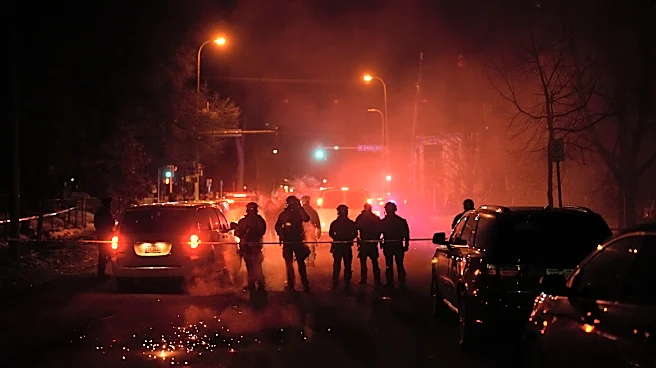
Minnesota Attorney General Keith Ellison has filed a lawsuit against Texas Governor Greg Abbott to compel the extradition of ICE officer Christian Castro. Castro is accused of shooting an illegal immigrant, Julio Sosa-Celis, in Minneapolis earlier this
year during an anti-ICE protest and subsequently lying about the incident. Castro faces four counts of second-degree assault with a deadly weapon and falsely reporting a crime. Initially, the Department of Homeland Security claimed Castro was ambushed, but video evidence and medical evaluations contradicted this, showing Castro only had an abrasion on his hand. Sosa-Celis was shot in the leg through a door as he fled. Castro was arrested in Texas 11 days after charges were filed in May. Under Texas law, fugitives can be held for up to 90 days, meaning Castro could be released soon if not extradited.
Why It's Important?
This legal action highlights a significant inter-state conflict regarding law enforcement accountability and extradition processes. Attorney General Ellison's lawsuit directly challenges Governor Abbott's refusal to extradite Castro, accusing the Texas governor of violating federal and state law. The case underscores the tensions between state and federal authorities, particularly concerning immigration enforcement and the conduct of federal agents. The outcome could set a precedent for how states handle extradition requests for federal officers accused of crimes within another state's jurisdiction. It also brings to light the scrutiny of law enforcement actions, especially in the context of protests and immigration operations, and the importance of video evidence in contradicting initial official reports. The political implications are also notable, with House Majority Whip Tom Emmer criticizing Ellison's motives as politically driven.
What's Next?
The lawsuit filed by Minnesota Attorney General Keith Ellison against Texas Governor Greg Abbott will proceed through the courts, aiming to compel Castro's extradition. The legal battle will likely focus on the interpretation of federal and Texas extradition laws and the governor's discretion in such matters. If the court rules in favor of Minnesota, Governor Abbott would be legally required to extradite Castro. Conversely, a ruling against Minnesota could allow Castro to be released in Texas if the 90-day holding period expires without extradition. This case could escalate to higher courts, potentially involving federal judicial review of state executive powers regarding extradition. Political reactions from both states and federal officials are expected to continue, further politicizing the issue of law enforcement accountability and inter-state cooperation.
Beyond the Headlines
This case delves into the complex interplay of state sovereignty, federal law enforcement authority, and individual accountability. It raises fundamental questions about the limits of executive power in refusing extradition requests and the mechanisms for ensuring justice across state lines when federal agents are involved. The differing political stances on immigration enforcement and law enforcement oversight between Minnesota and Texas further complicate the legal proceedings, reflecting broader national divisions. The outcome could influence future inter-state relations and the enforcement of federal laws, particularly in areas where state and federal interests diverge. It also highlights the critical role of independent investigations and evidence, such as video footage, in challenging official narratives and ensuring transparency in law enforcement actions, fostering public trust or distrust in the justice system.