









What's Happening?
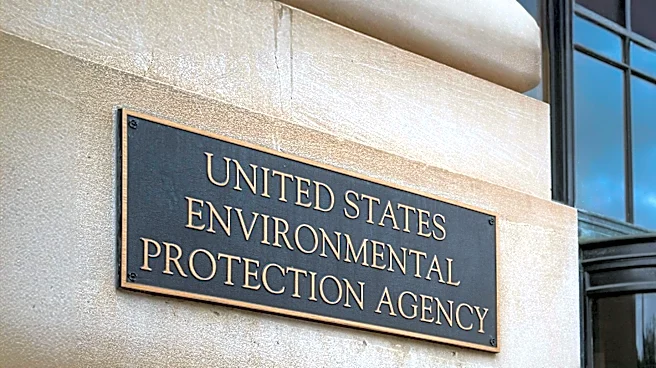
A new study from Texas Christian University indicates that the Environmental Protection Agency (EPA) may be significantly underreporting the levels of PFAS, or 'forever chemicals,' in U.S. drinking water. Published in Cell Reports Sustainability, the study utilized
computer modeling to estimate that current EPA reports capture only 44% of the average combined concentration of 25 PFAS in U.S. water systems. Researchers analyzed over 1.8 million PFAS measurement records from the EPA’s January 2026 release of monitoring data. They found that 98% of individual PFAS test results fell below the EPA’s minimum reporting levels (MRLs), which are often treated as zero in official summaries. Lead author Gehendra Kharel, associate professor of environmental and geological sciences at Texas Christian University, emphasized that 'below the reporting limit does not mean zero,' and this distinction is crucial for accurately summarizing PFAS concentrations. The study suggests that this conservative approach by the EPA leads to significantly lower contamination estimates.
Why It's Important?
The potential underreporting of PFAS levels has significant implications for public health and environmental policy in the U.S. PFAS are known to persist in the environment and are linked to various health problems, including certain cancers, high cholesterol, and reproductive issues. If actual concentrations are double what is currently reported, as the study suggests, then millions of Americans could be exposed to higher levels of these harmful chemicals than previously understood. This discrepancy could explain why human biomonitoring studies frequently detect PFAS in the blood of many Americans, regardless of their location or water source, even when official drinking water data show low or zero levels. Accurate reporting is vital for informing public health decisions, setting appropriate regulatory standards, and developing effective mitigation strategies to protect communities from long-term exposure to these persistent contaminants.
What's Next?
The study recommends that agencies, including the EPA, supplement traditional reporting methods by including estimates for below-limit results. This would involve clear disclosures of detection limits, the percentage of unmeasurable samples, and margins of error. Kharel and his team have developed PFAS-CAST, an open-source tool, to help agencies explore this approach with their own monitoring data. While these practices would complement existing compliance procedures and not alter health standards, they could provide a more complete picture of PFAS levels. The findings may prompt increased scrutiny of current EPA reporting methodologies and potentially lead to revisions in how environmental monitoring data are interpreted and communicated to the public. This could also fuel further debate on the EPA's proposed limits for certain PFAS in drinking water, which were established during the Biden administration.
Beyond the Headlines
The implications of this study extend beyond immediate reporting adjustments, touching upon the broader scientific and ethical considerations of environmental monitoring. The practice of treating results below the minimum reporting level as zero, while seemingly conservative, can mask the true extent of contamination and its cumulative impact on public health. This raises questions about the precautionary principle in environmental regulation and the responsibility of agencies to provide the most accurate possible data, even when faced with measurement limitations. The study highlights a critical gap between what standard laboratory tools can detect and the actual presence of chemicals, especially those with long half-lives that accumulate over time. Addressing this requires not only methodological improvements but also a re-evaluation of how 'safe' levels are defined and communicated, ensuring that the public is fully informed about potential environmental health risks.