


What's Happening?
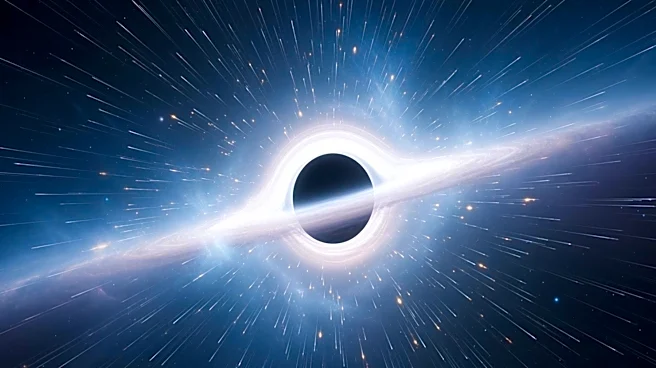
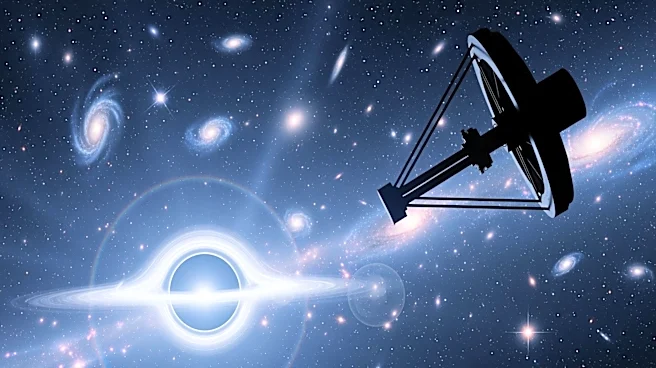
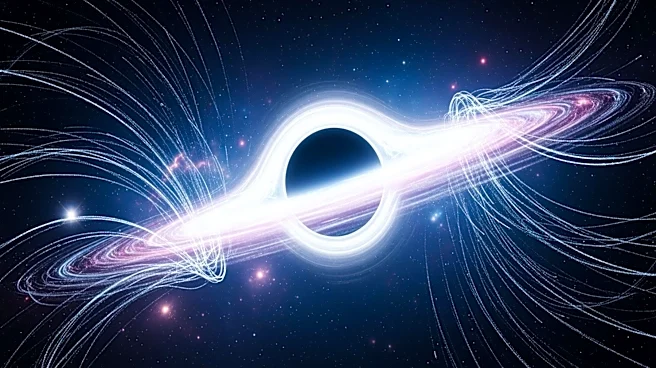
The James Webb Space Telescope (JWST) has successfully measured the mass of a dormant supermassive black hole located 10 billion light-years away, marking it as the most distant black hole of its kind to have its mass determined. This black hole, situated
in the galaxy MRG-M0138, weighs approximately 6 billion times the mass of the sun. The measurement was achieved by observing the motion of stars influenced by the black hole's gravitational pull, a technique known as stellar dynamics. This method, combined with gravitational lensing, allowed scientists to peer into the core of the distant galaxy and assess the black hole's mass. The findings provide valuable insights into the development of black holes and their role in galaxy evolution.
Why It's Important?
This discovery is significant as it enhances our understanding of how supermassive black holes evolve and influence their host galaxies. By measuring the mass of such a distant black hole, scientists can better comprehend the relationship between black hole growth and galaxy formation in the early universe. The ability to measure black holes at such distances opens new avenues for studying the universe's history and the role of black holes in shaping cosmic structures. This research also demonstrates the capabilities of the JWST in advancing our knowledge of the universe's most enigmatic phenomena.