



What's Happening?
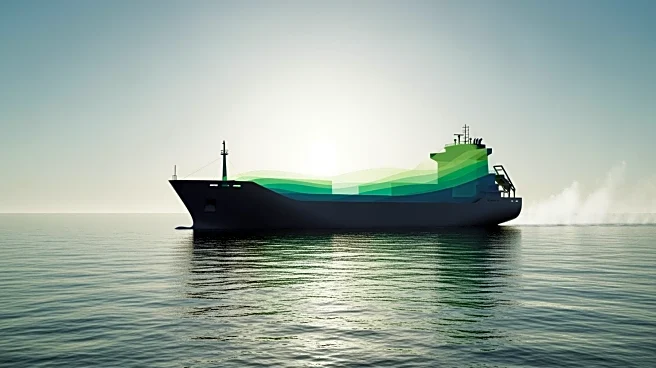
A new initiative supported by the Norwegian government and the German shipping company Hartmann Group is set to revolutionize sustainable shipping with the development of a methanol-powered cement carrier. This vessel, expected to enter service in early
2028, will primarily use green methanol as fuel, significantly reducing CO2 emissions. The project is part of the Green Shipping Program, which aims to promote low- and zero-emissions shipping in Norway. Heidelberg Materials Norway, a major player in the building materials industry, has secured funding from the Norwegian NOx Fund to support this initiative. The vessel will replace older ships in Heidelberg's fleet, offering a larger capacity and more efficient fuel use. The ship will transport cement from Brevik to various Norwegian cities, including Oslo and Bergen, and is expected to cut CO2 emissions by 80%, equating to 6,000 tons annually.
Why It's Important?
This development marks a significant step towards sustainable shipping, highlighting the potential of methanol as a viable alternative fuel. By reducing emissions, the project aligns with global efforts to combat climate change and sets a precedent for other industries to follow. The collaboration between public and private sectors demonstrates the effectiveness of joint efforts in achieving environmental goals. The success of this project could encourage further investments in green technologies, potentially leading to widespread adoption of similar solutions in other shipping segments. This initiative not only benefits the environment but also positions Norway as a leader in sustainable maritime practices.
What's Next?
As the project progresses, stakeholders will likely monitor the vessel's performance closely to assess the feasibility of expanding methanol use in shipping. The success of this initiative could lead to increased interest in alternative fuels like hydrogen and ammonia, which are also being explored under the Green Shipping Program. The shipping industry may see a shift towards more sustainable practices, with other countries potentially adopting similar models. Additionally, the project's outcomes could influence policy decisions and funding allocations for future green shipping projects.