




What's Happening?
Arkansas State University (A-State) has received a $1.3 million federal grant from the U.S. Department of Agriculture (USDA). This funding is part of a larger four-year, $2.6 million project aimed at enhancing animal health programs and agricultural research
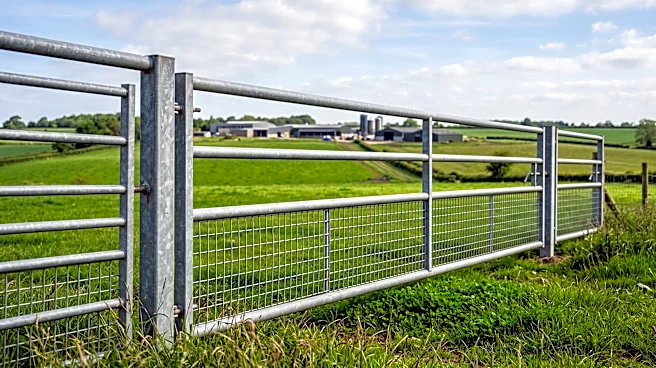
within the Delta region. The grant will support the construction of new facilities for the College of Veterinary Medicine, which recently welcomed its inaugural class of 122 students in August. Additionally, the project will bolster the College of Agriculture's animal science curriculum. According to Jennifer Bouldin, dean of the Beck College of Sciences and Mathematics, the university is currently organizing construction plans, beginning with fencing for livestock at the university's farm site. The USDA funding originates from the National Institute of Food and Agriculture's Research Facilities Program, which allocated a total of $121 million to 36 higher education institutions. The project commenced in September and is projected to conclude in 2030.
Why It's Important?
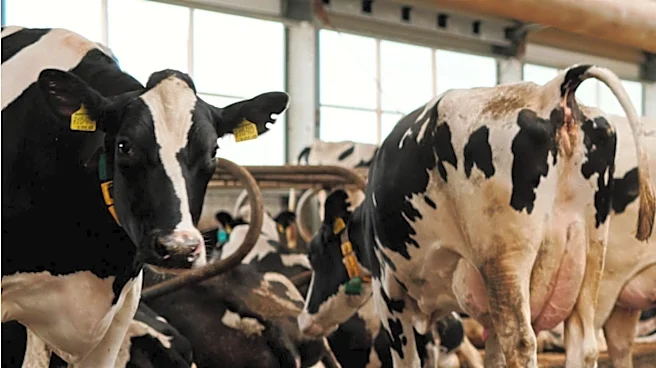
This significant federal investment in Arkansas State University's agricultural and veterinary programs is crucial for the U.S. agricultural sector, particularly in the Delta region. The improvements will enable A-State researchers to gain a deeper understanding of how nutrition, disease, and environmental factors influence livestock health and food production. This research is vital for ensuring food security, improving agricultural efficiency, and developing sustainable farming practices. The expansion and remodeling of facilities, along with the acquisition of new equipment for the Ecotoxicology Research Facility, will enhance the university's analytical capabilities. This will not only support advanced research in agriculture and veterinary medicine but also reduce operational costs, ultimately benefiting farmers and consumers through improved animal health and food quality. The grant also highlights the importance of federal support for academic institutions in addressing national challenges related to food systems and animal welfare.
What's Next?
With the project initiated in September and an anticipated completion in 2030, the immediate next steps involve the continued organization of construction plans, including the installation of fencing for cattle and horses at the university's farm. The university will proceed with the expansion of 1,472 square feet and the remodeling of 1,032 square feet of space. This will accommodate three new pieces of equipment designed for quantitative measurements of animal feed and crop composition, as well as the detection of trace metals. The university and donors have already committed matching funds, fulfilling a requirement of the four-year grant. These developments are expected to significantly advance A-State's research capacity and support its faculty, as emphasized by Travis Marsico, A-State's vice provost for research, innovation, and discovery.
Beyond the Headlines
The USDA grant to Arkansas State University extends beyond immediate research benefits, signaling a broader commitment to strengthening the nation's agricultural infrastructure and intellectual capital. By fostering advanced research in animal health and food production, the initiative addresses long-term challenges such as climate change impacts on agriculture, emerging animal diseases, and the need for more resilient food supply chains. The collaboration between federal agencies and academic institutions like A-State underscores a strategic approach to leveraging scientific expertise for national well-being. This investment also plays a role in regional economic development, positioning the Delta region as a hub for agricultural innovation and attracting talent to critical fields. The focus on ecotoxicology research, in particular, highlights a growing awareness of environmental factors in animal health and food safety, reflecting evolving public health and environmental standards.