


What's Happening?
A multinational training effort led by Norway in Poland is revealing the critical importance of electronic warfare (EW) capabilities, a skill set that Western militaries largely de-emphasized after the Cold War. Brig. Gen. Atle Molde, commander of Task
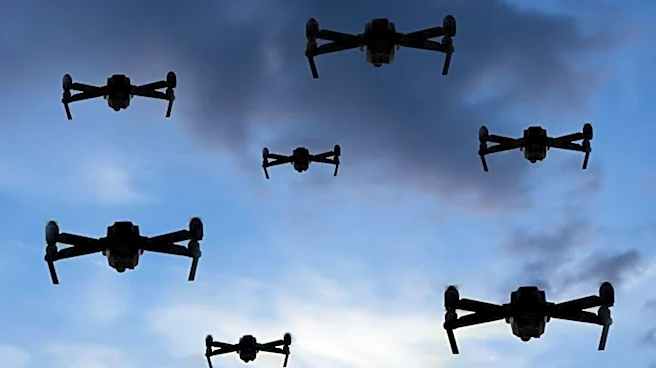
Force Legio, stated that the training camp in Poland, Camp Jomsborg, serves as a vital source of information. Ukrainian soldiers participating in the training bring invaluable battle-won experience in areas like electronic and drone warfare, which are proving crucial in the ongoing conflict with Russia. This collaboration is a two-way street, with NATO allies sharing Western practices while also learning from the Ukrainians' real-world combat experience. The war in Ukraine has exposed Western militaries to the demands of modern, large-scale combat, prompting a re-evaluation and increased investment in technologies and capabilities that had atrophied in the post-Cold War era, with EW being a prime example.
Why It's Important?
This renewed focus on electronic warfare is highly significant for U.S. and NATO military strategy. For decades after the Cold War, Western militaries shifted their emphasis to counterinsurgency and counterterrorism operations, leading to a decline in EW expertise and investment. The conflict in Ukraine, however, demonstrates that EW is a fundamental component of modern warfare, with both sides actively engaging in efforts to detect, jam, and disrupt enemy communications, drones, navigation, and sensors. The lessons learned from Ukrainian forces, who operate in what has been described as the "most dense and dangerous electromagnetic operating environment," are directly informing NATO's understanding of contemporary threats. This shift will likely lead to increased U.S. and NATO investment in EW research, development, and training, impacting defense budgets, procurement strategies, and military doctrine. It underscores the need for adaptability in military planning and the continuous evolution of defense capabilities to counter sophisticated adversaries.
What's Next?
The insights gained from the training in Poland will likely lead to significant adjustments in NATO's military doctrine and investment priorities. Expect to see increased funding allocated to electronic warfare systems, training programs, and the development of new technologies to operate effectively within the electromagnetic spectrum. NATO member states, including the U.S., will likely integrate these lessons into their own military exercises and force development. There will be a continued emphasis on learning from Ukraine's combat experience, potentially leading to more joint training initiatives and intelligence sharing. Furthermore, the focus on EW will likely extend to related areas such as drone technology and air defense, which have also proven critical in the Ukrainian conflict. The goal will be to rebuild and enhance EW capabilities to ensure NATO's readiness against peer and near-peer adversaries, particularly those with advanced EW capabilities like Russia.
Beyond the Headlines
The re-emphasis on electronic warfare goes beyond mere technological upgrades; it represents a fundamental shift in military thinking. The post-Cold War era fostered a sense that large-scale, conventional warfare was less likely, leading to a neglect of certain capabilities. The war in Ukraine has shattered this assumption, forcing Western militaries to confront the realities of high-intensity conflict. This shift has ethical and strategic implications, as EW involves operating in a complex and often unseen domain, impacting not only military communications but potentially civilian infrastructure. The need to "hide in plain sight" by controlling electronic signatures, as noted by Air Chief Marshal Sir John Stringer, highlights a new dimension of operational security. This renewed focus also raises questions about the balance between offensive and defensive EW capabilities and the potential for an escalating "electronic arms race." Ultimately, it underscores the continuous and dynamic nature of warfare, where past lessons must be re-learned and adapted to new technological and geopolitical landscapes.