




What's Happening?
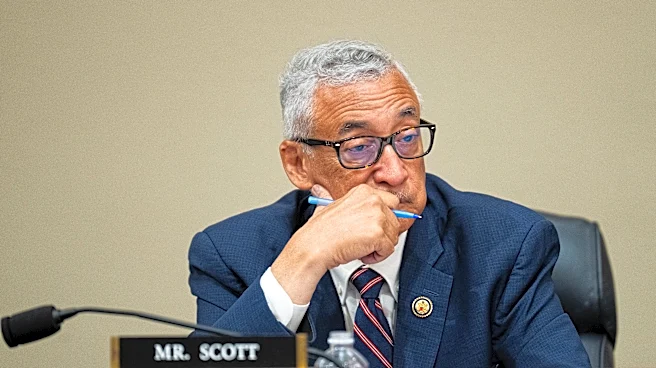
Representatives Josh Gottheimer and Mike Lawler have introduced the 'Stop Rogue AI Act,' a bipartisan legislative effort aimed at addressing the governance of artificial intelligence agents. The proposed act would mandate the National Institute of Standards
and Technology (NIST) to develop comprehensive standards for the discovery, inventorying, verification, and control of AI agents. This includes agents obtained from vendors or operated through external services. The bill translates AI agent governance into established cybersecurity concepts such as continuous inventory, verified identity, access control, runtime monitoring, provenance, tamper-evident logging, and organizational authority to constrain agent activity. While the bill was introduced in the outgoing Congress, it would require reintroduction in the new legislative session if not enacted.
Why It's Important?
The 'Stop Rogue AI Act' is significant as it represents a bipartisan attempt to establish a foundational framework for AI agent security in the United States. The increasing deployment of AI agents across various sectors, including government and private industry, necessitates clear guidelines to prevent misuse, ensure accountability, and mitigate potential risks. By focusing on cybersecurity principles, the bill aims to provide a practical and implementable approach to managing AI agents, which could impact companies that develop, deploy, or utilize AI in their operations. The establishment of NIST standards could become a benchmark for industry best practices, influencing how businesses approach AI governance, vendor selection, and internal control mechanisms. This initiative highlights a growing recognition within Congress of the need for proactive regulation in the rapidly evolving AI landscape.
What's Next?
If the 'Stop Rogue AI Act' is not enacted in the current Congress, it would need to be reintroduced in the upcoming legislative session. Its bipartisan nature suggests a potential path forward, especially given the increasing focus on AI regulation. The bill's structure, which aligns AI governance with familiar cybersecurity concepts, may facilitate its advancement in a divided Congress. Companies that sell AI to the government, deploy it in critical decisions, or make public safety commitments should monitor the progress of this legislation. The development of NIST standards, if mandated, would likely involve public comment periods and collaboration with industry stakeholders, providing opportunities for input and shaping future AI governance practices.
Beyond the Headlines
The 'Stop Rogue AI Act' touches upon deeper implications regarding the balance between innovation and control in the age of AI. The concept of 'agentic security' underscores the challenge of managing autonomous AI systems that can act independently. Establishing clear standards for inventory, verification, and control is crucial not only for preventing malicious use but also for ensuring transparency and accountability when AI agents make consequential decisions. This legislative effort reflects a broader societal concern about the ethical and practical challenges posed by advanced AI, prompting a re-evaluation of existing regulatory frameworks and the need for new ones tailored to the unique characteristics of AI agents. The bill's emphasis on 'organizational authority to constrain agent activity' highlights the ongoing human responsibility in overseeing and, if necessary, intervening in AI operations.