







What's Happening?
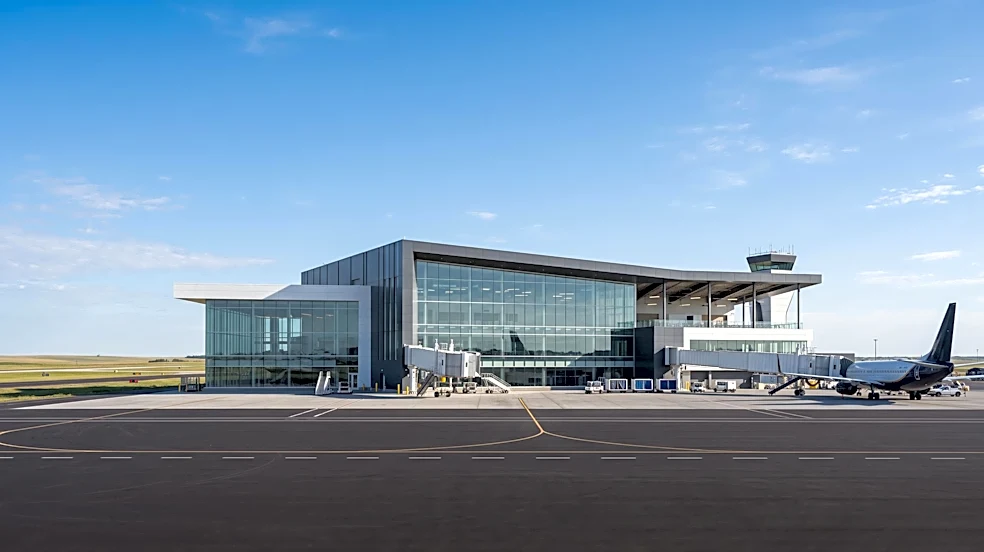
U.S. Representative Stephanie Bice successfully secured $6 million in federal funding for the Guthrie-Edmond Regional Airport's $7 million terminal expansion project. This funding was obtained through a Community Project Funding request. The overall project,
which recently celebrated its opening, includes a new terminal facility spanning approximately 5,500 square feet, effectively doubling the airport's existing terminal space. Additionally, the expansion adds about 150,000 square feet of aircraft parking apron. The remaining $1 million for the project was contributed by the state of Oklahoma, through the Oklahoma Department of Aerospace and Aeronautics ($500,000), and local funding split equally between the cities of Guthrie and Edmond ($500,000). Representative Bice expressed her pride in securing the federal funds, highlighting that the expansion will enhance airport amenities and provide additional aircraft parking. The new terminal is designed to increase capacity for business and general aviation, featuring amenities such as a public restaurant, an outdoor airside patio, a conference room, pilot offices, and a 24-hour pilot lounge.
Why It's Important?
This significant federal investment in the Guthrie-Edmond Regional Airport underscores the importance of regional aviation infrastructure for economic development. The expansion is expected to bolster the local economy by improving facilities for business and general aviation, which can attract more corporate and private air traffic. Enhanced airport amenities and increased parking capacity make the airport more appealing for businesses considering relocation or expansion in the region, potentially leading to job creation and increased commerce. Furthermore, the project strengthens Oklahoma's aerospace industry, as noted by Grayson Ardies, executive director of the Oklahoma Department of Aerospace and Aeronautics. The airport's strategic location near Interstate 35 and outside Oklahoma City's more congested airspace makes it a vital asset for regional connectivity and accessibility, benefiting both local communities and the broader state economy. The funding model, heavily reliant on federal support, also highlights a common approach for smaller general aviation airports to secure necessary infrastructure upgrades.
What's Next?
The newly expanded Guthrie-Edmond Regional Airport terminal is now operational, and its impact will likely be observed through increased air traffic, enhanced business activity, and greater utilization by the community. The airport is expected to continue serving as a hub for flight schools, aircraft maintenance operations, and other aviation-related businesses. Future developments may include further enhancements to services offered at the airport, potentially driven by increased demand from the expanded capacity. Local leaders and airport management will likely monitor the economic benefits and operational efficiency of the new facilities. The success of this project could also serve as a model for other regional airports seeking federal funding for similar infrastructure improvements, demonstrating the positive outcomes of collaborative funding efforts between federal, state, and local entities.
Beyond the Headlines
The expansion of the Guthrie-Edmond Regional Airport reflects a broader trend of investing in regional infrastructure to support economic growth and connectivity, particularly in areas outside major metropolitan hubs. This project highlights the role of Community Project Funding requests, often referred to as earmarks, in directing federal resources to specific local needs. While sometimes controversial, such funding mechanisms can be crucial for projects that might otherwise struggle to secure financing, especially for smaller airports that do not generate substantial revenue independently. The integration of public-facing features like a restaurant and community meeting space within the terminal also signifies an effort to make airports more accessible and integrated into the local community, extending their utility beyond just aviation services. This approach can foster greater public support and justification for ongoing municipal investment in airport operations, reinforcing the airport's role as a community asset.