





What's Happening?
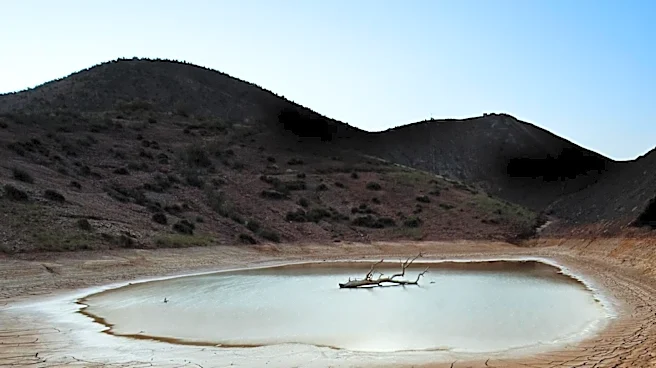
California has experienced the highest loss of large, historically significant lakes in the United States, primarily due to human water development. Lakes such as Tulare, Buena Vista, Kern, and Owens have largely disappeared as their water sources were
diverted for agriculture and urban use. Tulare Lake, once the largest freshwater lake west of the Mississippi, supported steamboat traffic and fisheries until irrigation diversions in the late 19th century caused its decline. Owens Lake, drained for the Los Angeles Aqueduct starting in 1913, became the largest source of PM10 dust pollution in the U.S., necessitating over $2.5 billion in dust-control measures. While some of these lakebeds, like Tulare, have temporarily refilled during exceptionally wet years, their normal open-water conditions have been eliminated.
Why It's Important?
The disappearance of these lakes has profound environmental and societal impacts. It leads to the destruction of wildlife habitats, reduces groundwater recharge, and exposes lakebeds that generate severe dust pollution, affecting air quality and public health. The case of Owens Lake, requiring billions in remediation, highlights the long-term economic costs associated with such environmental degradation. This issue underscores the critical challenges of water management in arid regions and the consequences of prioritizing agricultural and urban water demands over natural ecosystems. California's experience serves as a stark example for other states facing water scarcity, demonstrating the potential for irreversible ecological changes and significant financial burdens if water resources are not managed sustainably.
What's Next?
The ongoing water pressures in California suggest that the debate over water allocation and conservation will continue. While some lakes, like Mono Lake, have seen legal and regulatory actions to protect them, the overall trend of water diversion persists. Future efforts will likely focus on balancing agricultural and urban needs with environmental protection, potentially involving new water conservation technologies, revised water rights policies, and continued investment in dust control and ecosystem restoration. The intermittent refilling of lakebeds during wet years may prompt further discussions on how to manage these temporary water bodies for ecological benefit without compromising essential human water supplies. The long-term recovery of these lost ecosystems remains a significant challenge.
Beyond the Headlines
The story of California's lost lakes is a powerful illustration of the "tragedy of the commons" in water resource management, where individual or sectoral interests lead to the depletion of a shared resource. It also highlights the historical and ongoing "California Water Wars," a complex web of legal battles, political maneuvering, and engineering feats aimed at securing water for a growing population and agricultural industry. The environmental justice implications are also significant, as dust pollution from dried lakebeds disproportionately affects nearby communities. This situation forces a re-evaluation of what constitutes sustainable development in water-stressed regions and the ethical responsibilities of current generations to preserve natural resources for future ones. The lessons learned from California's experience could inform water policy and conservation strategies across the American West and other arid regions globally.