



What's Happening?
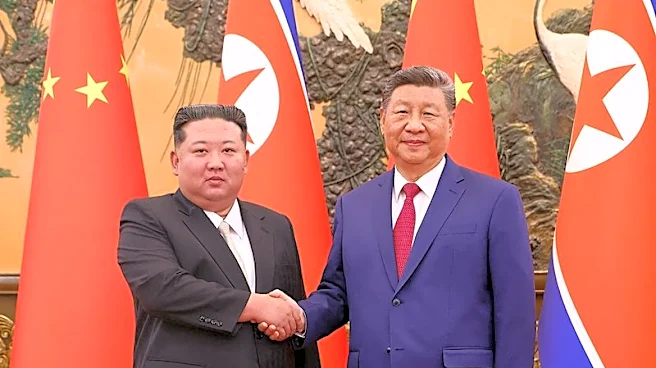
Chinese President Xi Jinping is set to visit North Korea for the first time in seven years, marking a significant diplomatic engagement as Beijing seeks to assert its influence over Pyongyang. The visit comes amid North Korea's deepening ties with Russia
and its ongoing nuclear developments. Xi's visit is expected to focus on strengthening bilateral cooperation, including military ties, and addressing regional security issues. North Korea may use the summit to seek economic concessions and possibly Beijing's tacit recognition of its nuclear status. The visit also reflects China's strategic interest in counterbalancing Russian influence over North Korea and aligning Pyongyang with Beijing's stance on Taiwan and regional defense matters.
Why It's Important?
Xi's visit underscores China's strategic interests in maintaining influence over North Korea, especially as Pyongyang strengthens its military and economic ties with Russia. The visit highlights the complex geopolitical dynamics in the region, with China aiming to manage escalation risks on the Korean peninsula and counterbalance Russian influence. For North Korea, the visit presents an opportunity to leverage its relationship with China for economic and diplomatic gains. The outcome of the summit could have significant implications for regional security and the balance of power in East Asia, particularly concerning nuclear proliferation and military alliances.
What's Next?
The visit may lead to further diplomatic engagements between North Korea and other global powers, including potential talks with the United States. North Korea's recent unveiling of a new uranium enrichment facility and plans to expand its nuclear capabilities indicate its intent to solidify its status as a nuclear power. The international community will closely monitor the outcomes of Xi's visit, as any shifts in North Korea's diplomatic stance could impact regional stability and global security dynamics. Additionally, China's efforts to align North Korea with its regional policies may influence future negotiations and alliances in East Asia.