







What's Happening?
An analysis of data from the U.S. Department of Education’s College Scorecard reveals a wide range in median federal student loan debt for graduates of New York colleges and universities, spanning from $5,500 to more than $30,000. This data specifically
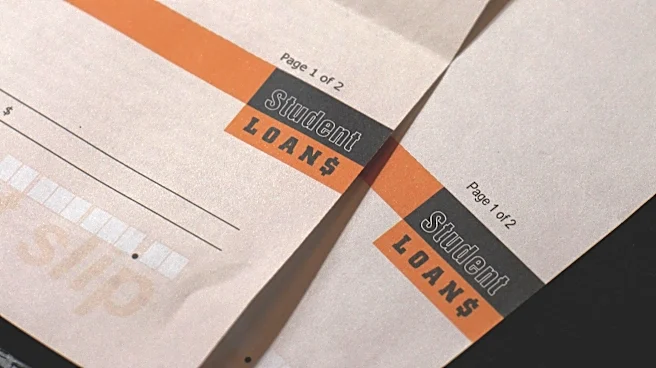
focuses on federal loans and excludes private student loans, Parent PLUS loans, and assistance for out-of-state schools. Graduates' typical monthly loan payments in New York State vary from $63 to $381, calculated over 10 years at a 6.52% interest rate. The U.S. Merchant Marine Academy in Kings Point reported the lowest median total debt at $5,500, benefiting from tuition-free education and free housing. Conversely, Metropolitan College of New York graduates face the highest median total debt at $33,538, followed closely by Berkeley College at $32,500.
Why It's Important?
The significant disparity in student debt among New York college graduates highlights the varying financial accessibility and value propositions of different higher education institutions. This information is crucial for prospective students and their families in making informed decisions about college choices, as it directly impacts their post-graduation financial well-being. High debt loads can delay major life milestones such as homeownership, marriage, and starting a family, contributing to broader economic challenges. The analysis also underscores the importance of financial aid policies, such as 'meets-need/no-loan' programs, which can substantially reduce the debt burden for students. Understanding these debt trends is vital for policymakers and educational institutions to develop strategies that promote affordability and reduce the long-term financial strain on graduates.
What's Next?
Prospective students and their families will likely use this data to evaluate college options more critically, prioritizing institutions with lower median debt or robust financial aid packages. Educational institutions, particularly those with high median debt figures, may face increased scrutiny and pressure to address rising costs and improve financial transparency. There could be a growing demand for more comprehensive financial literacy programs for students to better understand loan terms and repayment options. Policymakers might consider initiatives to expand 'meets-need/no-loan' policies or explore other mechanisms to cap student debt, ensuring that higher education remains an accessible and economically viable pathway for all New Yorkers. The ongoing discussion about college affordability will continue to shape educational funding and policy debates.
Beyond the Headlines
The varying debt levels among New York college graduates reflect deeper systemic issues within the higher education landscape, including tuition inflation, the availability of institutional aid, and the economic value of different degrees. The exclusion of private and Parent PLUS loans from this analysis suggests that the true debt burden for many families could be even higher, painting a more challenging picture of post-graduation financial realities. This situation also raises questions about the long-term economic impact on the state, as graduates burdened with debt may have less disposable income, affecting local economies. The data implicitly encourages a reevaluation of the return on investment for various college programs and highlights the need for a more equitable and sustainable model for financing higher education in the U.S.