




What's Happening?
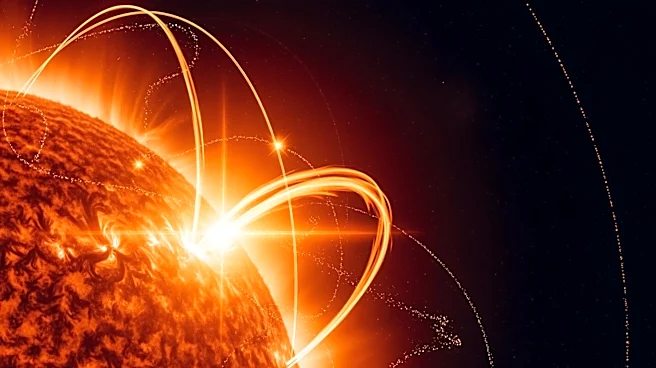
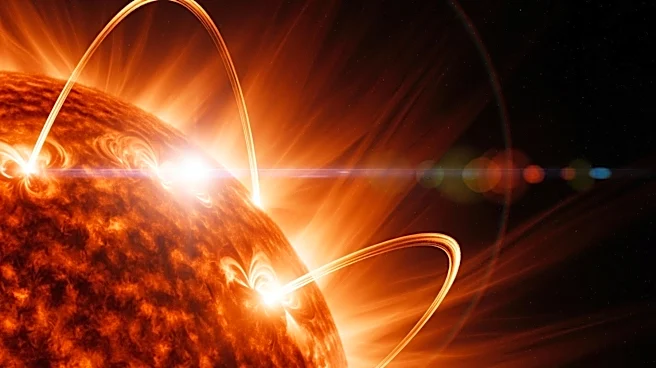
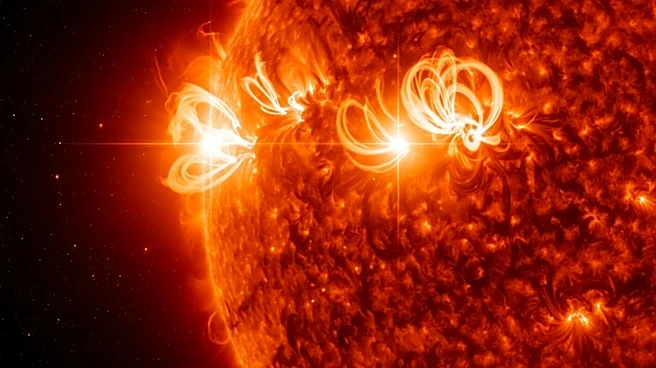
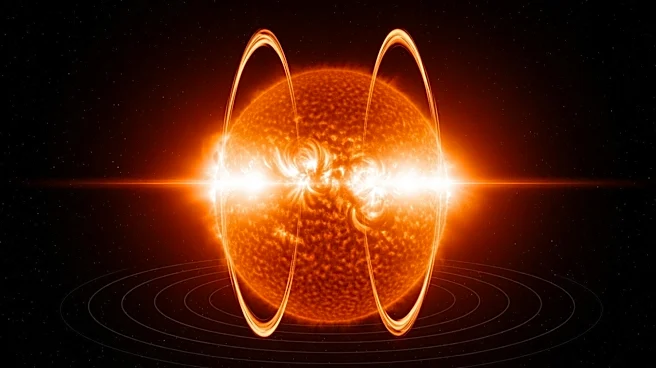
NASA has reported that two significant solar flares, classified as X-class, erupted from the Sun on April 23 and 24, 2026. These flares caused temporary radio blackouts across parts of the Pacific Ocean, Australia, and East Asia. The flares were captured
by NASA’s Solar Dynamics Observatory and are noted as the most significant solar activity in 78 days. The first flare, an X2.4 event, peaked on April 23, followed by a slightly stronger X2.5 flare on April 24. These solar flares have raised concerns about potential impacts on Earth's power grids, particularly in Canada, which has experienced similar disruptions in the past, such as the 1989 Quebec blackout.
Why It's Important?
The occurrence of these solar flares is significant due to their potential to disrupt critical infrastructure. Solar storms can induce geomagnetic currents in power grids, leading to blackouts. Canada, with its long power transmission lines and geographical positioning, is particularly vulnerable. The 1989 Quebec blackout serves as a historical example of the potential impact of such solar events. The current solar activity highlights the need for preparedness in managing the risks associated with geomagnetic storms, which can affect radio communications, GPS accuracy, and power grid stability.
What's Next?
Space weather agencies are closely monitoring the situation, with forecasts indicating the possibility of a minor geomagnetic storm around April 26. Canadians, especially those in higher latitudes, may witness aurora displays as a result of these solar activities. The ongoing solar maximum phase suggests that elevated solar activity could continue, necessitating vigilance from power utilities and industries reliant on satellite communications. The potential for further geomagnetic disturbances underscores the importance of continued monitoring and infrastructure resilience planning.