



What's Happening?
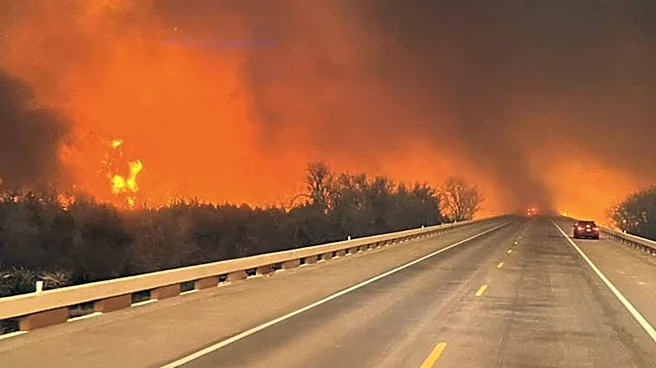
An active wildfire was reported at Wassaw National Wildlife Refuge in Tybee Island, Georgia, on Sunday, according to the Savannah Coastal Refuges Complex. The fire was concentrated around the fire trail and pavilion trail within the refuge. As of 5:40
p.m. on Sunday, the blaze was estimated to cover approximately 100 acres. In response to the ongoing fire and for public safety, the boat dock and the affected trails have been closed to visitors. However, the north and south ends of the island remain accessible for beach use. The Savannah Coastal Refuges Complex communicated these details through a social media post, advising the public about the closures and accessible areas.
Why It's Important?
The active wildfire at Wassaw National Wildlife Refuge poses a significant threat to the delicate ecosystem of the barrier island. National wildlife refuges are critical for conserving diverse habitats and species, and a fire of this size can cause extensive damage to vegetation, disrupt wildlife populations, and alter the ecological balance. The closure of trails and the boat dock impacts public access to recreational areas, affecting local tourism and outdoor activities. Furthermore, wildfires can release substantial amounts of smoke and air pollutants, potentially affecting air quality in nearby communities like Tybee Island and Savannah. The incident highlights the ongoing challenge of managing natural areas, especially in coastal regions that may be susceptible to dry conditions and fire risks. The response and containment efforts are crucial to mitigating long-term environmental consequences and ensuring the safety of both the public and the refuge's natural resources.
What's Next?
Authorities from the Savannah Coastal Refuges Complex will continue to monitor the wildfire at Wassaw National Wildlife Refuge and work towards its containment. The immediate next steps will involve assessing the fire's spread, deploying resources to control the blaze, and ensuring the safety of personnel and the public. The closed trails and boat dock will likely remain inaccessible until the fire is fully extinguished and the area is deemed safe for public use. Investigations may follow to determine the cause of the wildfire, especially given previous reports of a lightning-caused fire on Wassaw Island. Depending on the fire's behavior and weather conditions, additional measures might be implemented to protect sensitive habitats or prevent further spread. The long-term outlook will involve ecological assessments to understand the impact of the fire on the refuge's flora and fauna, followed by potential restoration efforts to aid in the recovery of the affected areas.
Beyond the Headlines
The recurring nature of wildfires, even in seemingly less fire-prone coastal environments like Wassaw National Wildlife Refuge, underscores the broader implications of changing climate patterns and environmental conditions. Barrier islands, while often associated with water, can become highly combustible during dry spells, posing unique challenges for fire management due to their remote nature and sensitive ecosystems. This incident highlights the need for robust fire prevention and response strategies in all types of natural reserves, not just those traditionally considered high-risk. It also brings to light the delicate balance between public access and environmental protection in such areas. The long-term ecological recovery of a coastal refuge after a wildfire can be complex, affecting everything from nesting bird populations to dune stability and marsh health. This event serves as a reminder of the constant vigilance required to preserve these invaluable natural treasures for future generations.