




What's Happening?
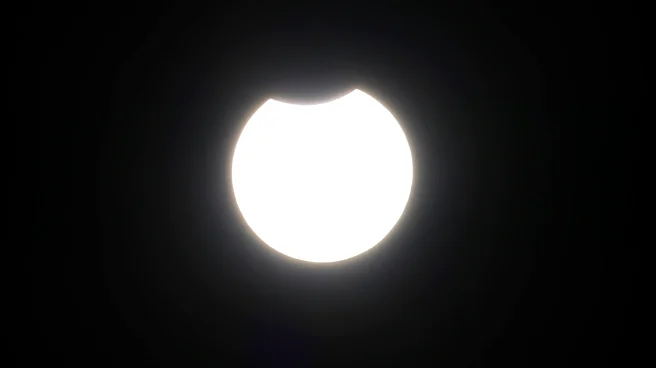
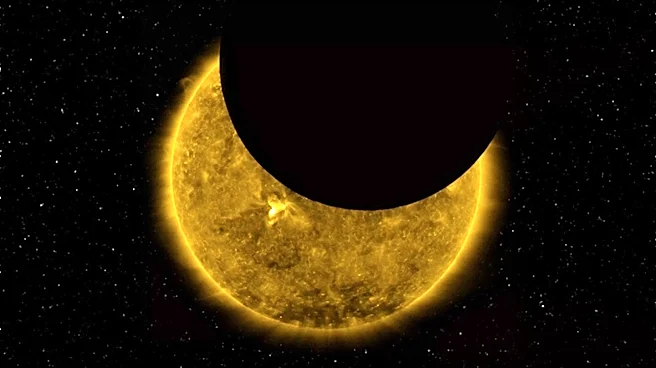
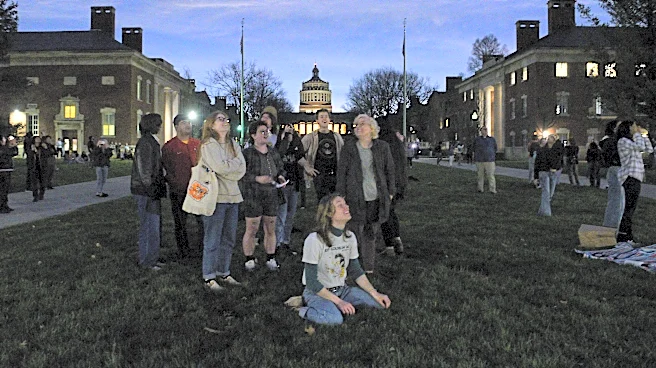
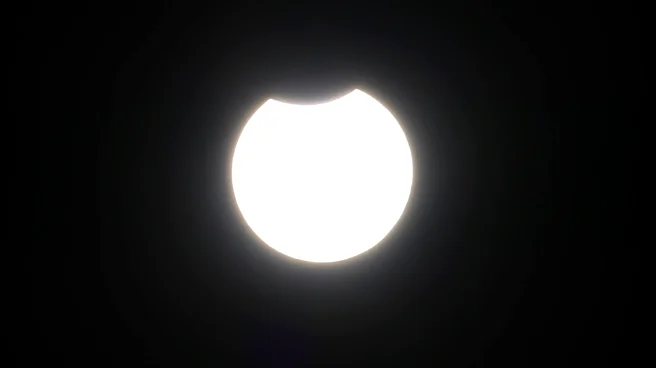
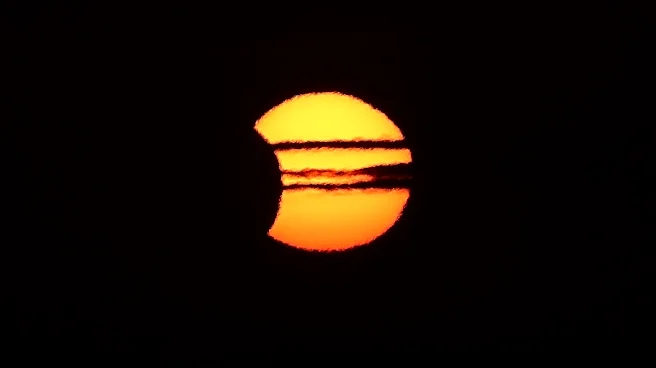
During the phases of a solar eclipse when the sun is partially obscured, a unique optical phenomenon occurs. Small gaps found in the environment, such as the spaces between leaves on a tree, function as natural pinhole projectors. These tiny apertures
allow light to pass through, casting distinct crescent-shaped illuminations onto surfaces. This effect is a direct result of the sun's partially eclipsed shape being projected through these small openings, creating multiple, inverted images of the crescent sun. The source notes that further examples of these 'eclipse crescent projections' can be found through online image searches. This observation highlights a fascinating interaction between celestial events and everyday environmental elements, transforming ordinary gaps into temporary optical instruments.
Why It's Important?
The importance of this phenomenon lies in its demonstration of fundamental optical principles through a natural, observable event. It offers a tangible illustration of how light travels in straight lines and how a small aperture can project an image, akin to a camera obscura. For the public, it provides an accessible and visually striking aspect of a solar eclipse, enhancing the experience beyond direct viewing. This natural projection serves as a reminder of the scientific wonders embedded in everyday observations and celestial mechanics. It can spark curiosity about astronomy and physics, encouraging individuals to look for and understand such phenomena during future eclipses.
What's Next?
The source does not provide any information regarding future actions, consequences, or scheduled decisions related to this phenomenon. As a natural optical effect tied to solar eclipses, its occurrence is contingent upon future celestial alignments. Observers during subsequent solar eclipses will likely continue to witness these crescent-shaped projections in areas where the sun is partially obscured. The phenomenon itself does not necessitate specific next steps or reactions from stakeholders, as it is an inherent part of the eclipse experience. Educational institutions and science communicators may continue to highlight these unique visual effects as part of broader eclipse-related outreach efforts, encouraging safe viewing practices and scientific curiosity.
Beyond the Headlines
The deeper implications of observing natural pinhole projections during an eclipse extend to the appreciation of scientific principles in unexpected contexts. It underscores how simple environmental elements can reveal complex physical laws, making science accessible and engaging. This phenomenon also contributes to the broader cultural and educational value of solar eclipses, offering a unique visual detail that enriches the public's understanding and experience of these rare astronomical events. It serves as a subtle yet powerful reminder of the constant interplay between light, shadow, and celestial bodies, fostering a sense of wonder and encouraging observational science.