







What's Happening?
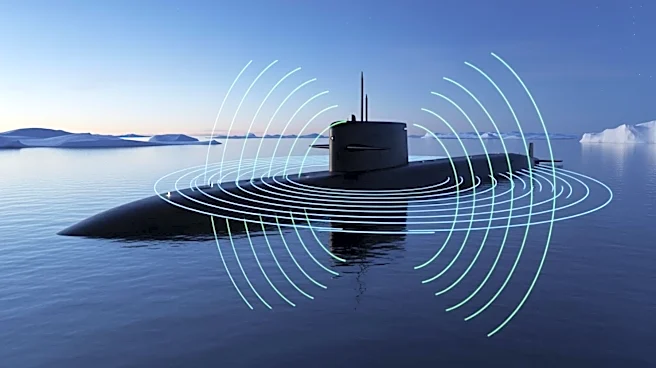
The UK Ministry of Defence (MoD) has reported the tracking of a Russian attack submarine in international waters in the High North during February or March 2026. The Royal Navy's Type 23 Frigate HMS St Albans and a Royal Air Force Boeing Poseidon MRA1
maritime patrol aircraft were involved in identifying and monitoring the submarine's activities. The MoD stated that the submarine was deployed as a distraction, while other Russian undersea units from the Main Directorate of Deep Sea Research were engaged in activities over critical undersea infrastructure. The UK collaborated with Norway to monitor these activities, deploying sonobuoys to track the Russian vessels. The MoD also released satellite imagery of Russia's Olenya Guba naval base, highlighting the presence of the Delta IV Stretch submarine Podmoskovye and the intelligence-gathering vessel Yantar.
Why It's Important?
This development underscores the ongoing tensions and strategic maneuvers in the Arctic region, a critical area for both military and economic interests. The presence of Russian submarines near critical undersea infrastructure poses potential threats to international security and stability. The UK's proactive measures in tracking these activities highlight the importance of international cooperation in monitoring and responding to such threats. This situation could impact geopolitical relations, particularly between NATO allies and Russia, as they navigate the complexities of military presence and activities in the Arctic. The incident also emphasizes the need for robust maritime surveillance and defense capabilities to safeguard national and allied interests.
What's Next?
The UK and its allies are likely to continue monitoring Russian naval activities closely, particularly in strategic regions like the Arctic. This may lead to increased military presence and surveillance operations in the area to deter potential threats. Diplomatic discussions and strategic planning among NATO members could be anticipated to address the security challenges posed by Russian activities. Additionally, there may be calls for enhanced international regulations and agreements to manage military operations in the Arctic, ensuring the protection of critical infrastructure and maintaining regional stability.