
What's Happening?
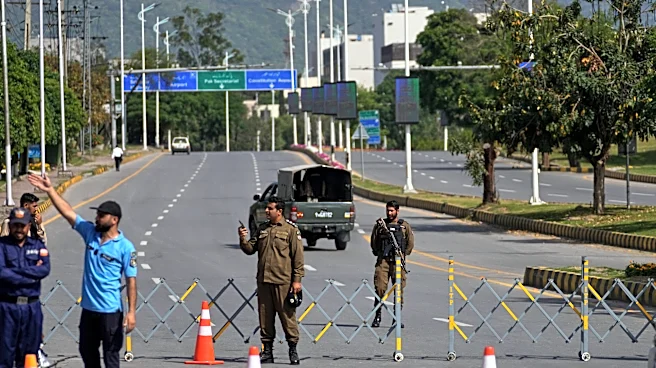
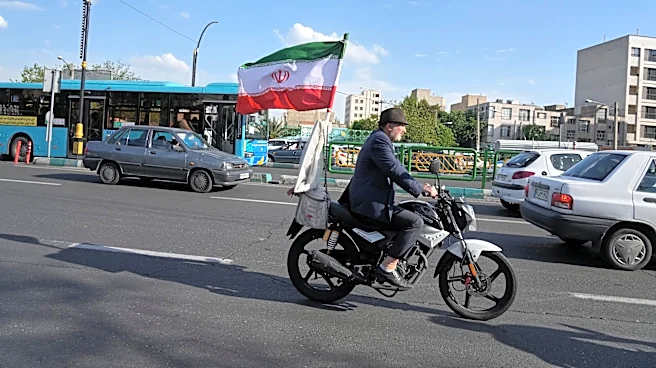
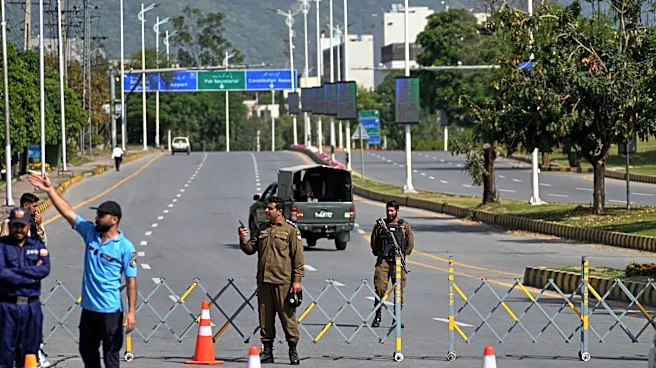
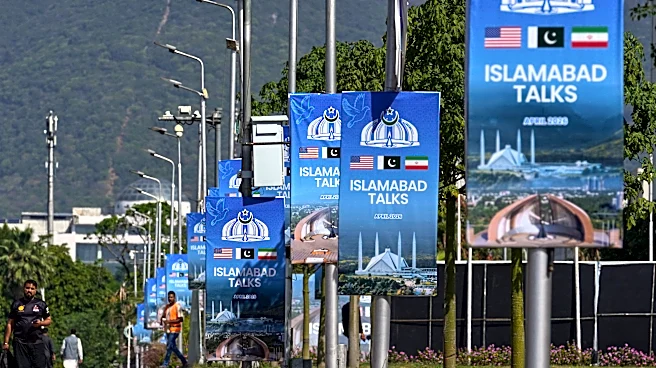
Iran's Foreign Minister Abbas Araghchi is set to visit Islamabad, Pakistan, to discuss Tehran's proposal for renewed talks with the United States. This development comes after previous negotiations collapsed
earlier this week. Pakistani sources indicate that the Iranian proposal will be conveyed to the U.S., with the American blockade on the Strait of Hormuz continuing as per Defense Secretary Pete Hegseth. The White House has announced that U.S. Envoy Witkoff and Kushner will travel to Pakistan for the talks, with Vice President JD Vance on standby to attend if an in-person meeting is requested by Iran.
Why It's Important?
The potential resumption of U.S.-Iran talks in Pakistan represents a critical opportunity to de-escalate tensions between the two countries. The ongoing blockade of the Strait of Hormuz has significant implications for global oil markets and international trade, making diplomatic resolutions crucial for economic stability. Successful negotiations could lead to a reduction in regional tensions and a more stable geopolitical environment. However, the continuation of the blockade and the complex political dynamics involved pose challenges to achieving a lasting agreement. The outcome of these talks could influence future U.S. foreign policy and its approach to Middle Eastern affairs.
What's Next?
The upcoming talks in Pakistan will be closely watched by international stakeholders, including governments, businesses, and civil society groups. The success or failure of these negotiations could have far-reaching consequences for regional stability and global economic conditions. If the talks progress positively, they may pave the way for further diplomatic engagements and potential easing of sanctions. Conversely, if the talks falter, tensions could escalate, leading to increased geopolitical risks. The international community will likely continue to advocate for peaceful resolutions and monitor the situation closely.