






What's Happening?
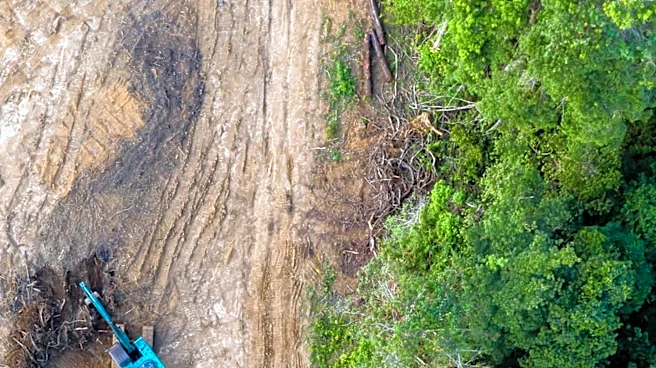
Countries across the Asia-Pacific region are intensifying their collaborative efforts to decouple agricultural value chains from deforestation. The region, which accounts for over half of global agricultural output and 23% of worldwide deforestation (2.5
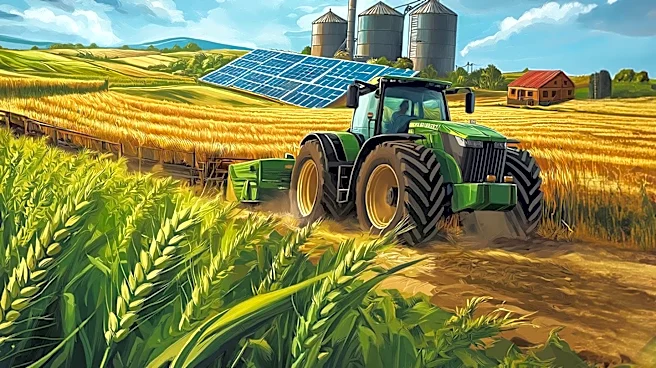
million hectares annually), faces a paradox where its economic system, heavily reliant on forests, also drives their decline. Approximately 86% of deforestation in the region is linked to unsustainable agricultural expansion for commodities such as oil palm, natural rubber, coffee, and cattle meat, with half of this commodity-driven deforestation tied to exports. In response, over 120 representatives from governments, industry associations, civil society, and smallholder organizations from 10 Asia-Pacific countries have developed a shared 'Asia-Pacific Roadmap on Decoupling Agricultural Value Chains from Deforestation.' This roadmap outlines six key action areas, including strengthening land governance, scaling sustainable agricultural production models, increasing trade of responsibly produced commodities, creating incentives for forest integrity, enhancing data for decision-making, and improving livelihoods and promoting equity. These actions align with FAO's agrifood systems transformation framework and aim to achieve forest-positive outcomes by 2030.
Why It's Important?
This collaborative initiative is crucial for the long-term environmental and economic stability of the Asia-Pacific region and has global implications. The region's significant contribution to global agriculture means that unsustainable practices have far-reaching environmental consequences, including climate change and biodiversity loss. By addressing deforestation linked to agriculture, these nations are working to protect vital natural resources that regulate climate, water cycles, and agricultural pest control, all essential for sustained agricultural productivity. The roadmap's focus on sustainable practices and responsible trade can set a precedent for other regions grappling with similar challenges. For U.S. industries and consumers, this could mean a more stable supply of certain commodities in the long run, but also potential shifts in sourcing and increased demand for sustainably produced goods. The emphasis on data, traceability, and market requirements like the EU Deforestation-free Regulation could influence global supply chain standards, impacting international trade and investment flows.
What's Next?
The non-binding actions outlined in the Asia-Pacific Roadmap are expected to be implemented by 2030. This will involve the development of regional principles for collaboration and the establishment of a regional multi-stakeholder partnership on sustainable commodities. Several countries, including Lao PDR, have already initiated processes to translate regional ambitions into nationally adapted action plans, with national-level workshops scheduled for late 2026 and early 2027 to strengthen capacities for measurable progress. Participants have also agreed to annually review progress against the roadmap. These efforts are expected to strengthen the long-term sustainability and resilience of agricultural production, benefiting both the region's forests and the millions of people dependent on them. The approaches developed in Asia are also feeding into broader global discussions on de-risking and financing forest-positive supply chains, aligning with global agendas that call for cross-sectoral action to halt forest loss.
Beyond the Headlines
The initiative highlights a growing recognition of the interconnectedness between economic development and environmental sustainability. The paradox of agriculture driving deforestation while simultaneously relying on healthy forests underscores the need for systemic changes in how food and other commodities are produced and traded. This shift towards decoupling agricultural value chains from deforestation represents a significant move beyond traditional conservation efforts, integrating environmental goals directly into economic policy and business practices. The emphasis on land governance, community rights, and equitable livelihoods also points to a deeper understanding of the social dimensions of environmental issues. This collaborative model could serve as a blueprint for addressing other complex global challenges that require multi-stakeholder engagement and cross-border cooperation, fostering a more resilient and sustainable global economy.