







What's Happening?
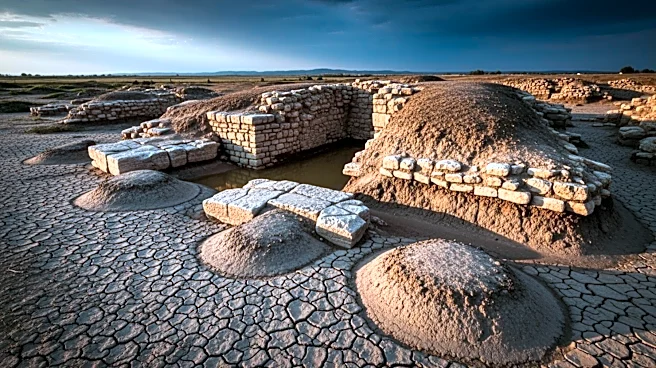
Recent archaeological research has shed light on how natural disasters have historically influenced the rise and fall of civilizations. A study led by Briant García from Peru’s Instituto Geológico Minero y Metalúrgico, published in Geoarchaeology, reveals
that the ancient city of Pikillaqta in southern Peru was likely abandoned due to two powerful earthquakes and a subsequent landslide around AD900. This discovery challenges previous theories that attributed the city's decline to war, disease, or water scarcity. Similarly, research on the ancient city of Teotihuacan in Mexico suggests that repeated 'megathrust' earthquakes contributed to its decline after AD550. These findings underscore the significant impact of natural events on historical societies, a factor often overlooked in favor of human-centric explanations.
Why It's Important?
Understanding the role of natural disasters in historical societal changes is crucial for modern-day planning and resilience building. These insights can inform current strategies to mitigate the impacts of climate change and natural disasters. By recognizing the historical precedence of environmental factors in societal shifts, policymakers and researchers can better predict and prepare for future challenges. This knowledge is particularly relevant as contemporary societies face increasing threats from climate change, which could lead to similar disruptions in modern infrastructure and communities.
What's Next?
The ongoing research into the historical impacts of natural disasters is likely to continue, with archaeologists and geologists using advanced technologies to uncover more about how past societies adapted to environmental changes. These studies could lead to more comprehensive models for predicting the effects of current and future climate-related events. Additionally, there may be increased collaboration between historians, scientists, and policymakers to integrate these findings into practical applications for disaster preparedness and urban planning.
Beyond the Headlines
The recognition of natural disasters as pivotal factors in historical societal changes also prompts a reevaluation of cultural narratives that have traditionally emphasized human agency. This shift could influence educational curricula and public discourse, fostering a more nuanced understanding of history that includes environmental factors. Furthermore, it highlights the importance of interdisciplinary approaches in historical research, combining archaeology, geology, and climate science to provide a fuller picture of the past.