





What's Happening?
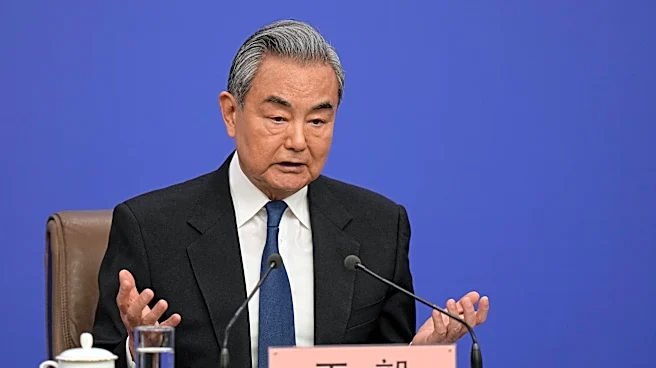
Pakistan and Afghanistan have initiated peace talks in Urumqi, China, with the aim of establishing a durable ceasefire after weeks of conflict. The discussions, mediated by China, involve representatives from both countries, including officials from Afghanistan's
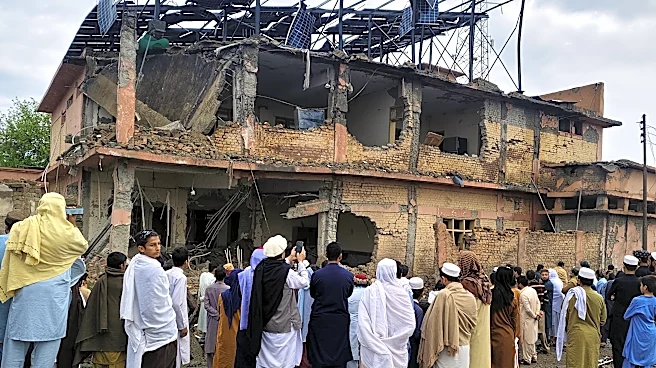
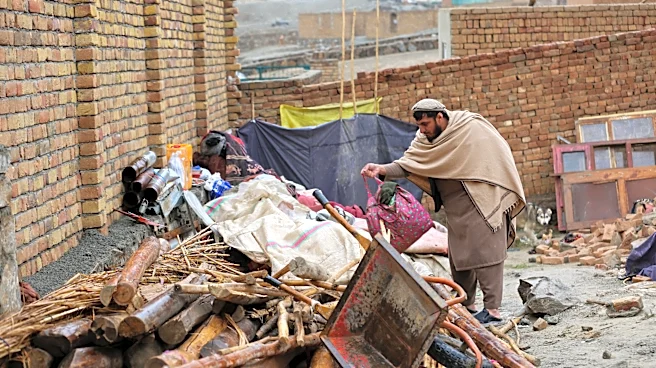
foreign, defense, and interior ministries. Despite the ongoing talks, tensions remain high, with Afghanistan accusing Pakistan of firing mortars into its territory, resulting in civilian casualties. The talks are seen as a potential relief for millions affected by the conflict, although the Pakistani Ministry of Foreign Affairs has not confirmed the talks. The discussions are expected to continue, with China playing a key role in facilitating dialogue.
Why It's Important?
The peace talks between Pakistan and Afghanistan are crucial for regional stability, as the conflict has significant implications for both countries and the broader international community. The ongoing violence has disrupted lives and heightened tensions, with cross-border clashes and airstrikes exacerbating the situation. A successful ceasefire could lead to improved relations and reduce the threat posed by militant groups in the region, such as al-Qaida and the Islamic State. The involvement of China as a mediator underscores the geopolitical significance of the talks, as China seeks to maintain stability in its neighboring regions.
What's Next?
The continuation of talks in China suggests a commitment to finding a peaceful resolution, although challenges remain. Both sides need to establish a verification mechanism to ensure Afghan territory is not used for attacks against Pakistan. The international community will be closely monitoring the situation, as the outcome could influence regional security dynamics. Further negotiations are likely, with potential involvement from other international stakeholders to support the peace process.