
What's Happening?
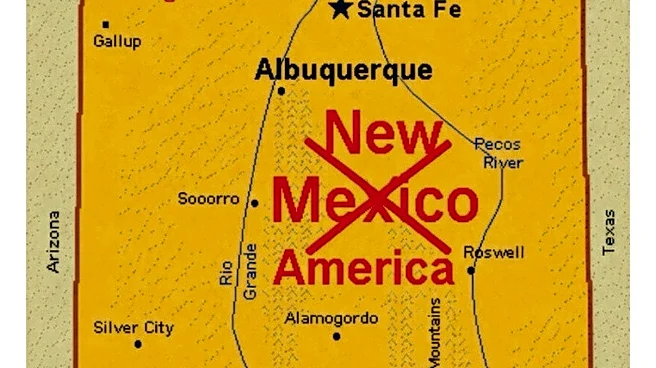
President Trump engaged in a day-long social media spree on Truth Social, during which he suggested renaming the U.S. state of New Mexico to 'New America.' He claimed that 'many people suggested' this
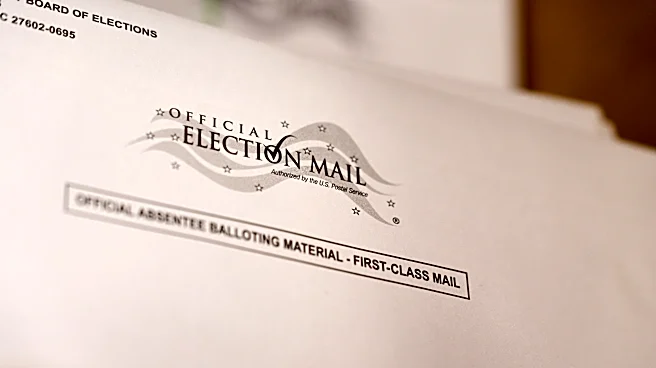
change, describing New Mexico as 'one of the great vote cheating states of all time.' President Trump shared an AI-generated video of himself changing the name and dancing, along with a map of the state reflecting the proposed name change. This suggestion was part of over 60 messages, including rants, personal attacks, and AI-generated images, posted by President Trump between 9:10 a.m. and 10:35 p.m. on Sunday.
Why It's Important?
President Trump's suggestion to rename a U.S. state, particularly one he labels as having 'vote cheating,' carries significant political and symbolic weight. Such a proposal, even if rhetorical, can be seen as undermining the legitimacy of state elections and institutions. It also reflects a broader pattern of President Trump using social media to express controversial ideas and attack perceived political adversaries. The use of AI-generated content in these posts further blurs the lines between reality and digital manipulation, potentially contributing to misinformation and distrust in official narratives. This event highlights the ongoing impact of President Trump's social media presence on political discourse and public perception.
What's Next?
While the renaming of a U.S. state is highly unlikely to occur, President Trump's suggestion will likely generate discussion and criticism from political opponents, media, and the public. It may also be used by his supporters as a talking point regarding election integrity. The continued use of AI-generated content by President Trump on social media could prompt further debate about the ethical implications of such technology in political communication. This event is part of a larger pattern of President Trump's engagement on social media, which will likely continue to be a significant aspect of his public presence and political strategy.
Beyond the Headlines
President Trump's proposal to rename New Mexico, coupled with his accusations of 'vote cheating,' delves into deeper issues of national identity, electoral integrity, and the weaponization of language in politics. The idea of unilaterally renaming a state, even as a suggestion, challenges the established norms of federal-state relations and democratic processes. Furthermore, the reliance on AI-generated content in political messaging raises profound questions about authenticity, propaganda, and the future of information dissemination. This trend can contribute to a post-truth environment where subjective claims and digitally altered realities gain prominence, potentially eroding the public's ability to discern factual information from politically motivated narratives.