



What's Happening?
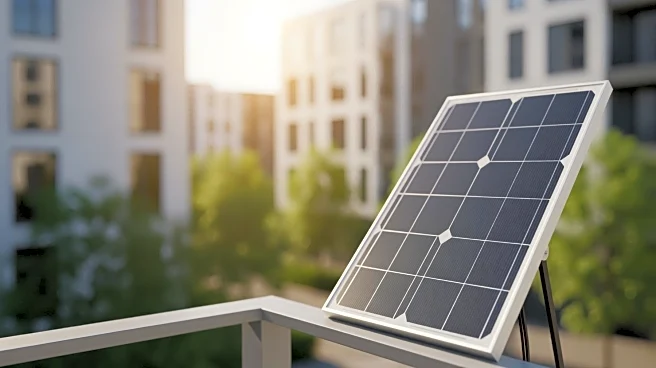
Illinois is currently considering Senate Bill 3104, which aims to simplify the installation process for small balcony solar systems. The proposed legislation seeks to eliminate the state's existing pre-authorization requirement, replacing it with a simple
notification form for utility companies. Additionally, the bill would prohibit any additional fees or installation expenses and prevent property owners and homeowner associations from imposing unreasonable obstacles. The bill primarily targets small systems in the 300-400 watt range but also includes provisions for larger systems up to 1,200 watts. The legislation mandates that these systems be certified by a nationally recognized laboratory, with UL Solutions having recently launched a certification program for such systems. The bill is sponsored by Rep. Daniel Didech and Sen. Rachel Ventura, who emphasize the importance of making solar energy more accessible and affordable.
Why It's Important?
The passage of Senate Bill 3104 could significantly impact the adoption of solar energy in Illinois by making it more accessible and affordable for residents, particularly those living in apartments or homes with limited roof space. By removing bureaucratic hurdles and additional costs, the bill could encourage more individuals to invest in renewable energy, thereby contributing to the state's renewable energy goals. This move aligns with broader trends in the U.S. towards increasing the use of clean energy sources, which can help reduce reliance on fossil fuels and decrease greenhouse gas emissions. The bill's success could also serve as a model for other states considering similar legislation, potentially leading to a wider adoption of balcony solar systems across the country.
What's Next?
If passed, the bill would set a precedent for other states to follow, potentially leading to a nationwide increase in the adoption of balcony solar systems. States like Maryland, Minnesota, New Hampshire, New York, Pennsylvania, Vermont, and Virginia are already considering similar legislation. The success of this bill could prompt further legislative efforts to support renewable energy initiatives, potentially influencing federal energy policies. Stakeholders such as utility companies, property owners, and homeowner associations may need to adjust their policies and practices to accommodate the new regulations. Additionally, the increased demand for certified balcony solar systems could drive innovation and competition among manufacturers, potentially leading to advancements in solar technology.