
What's Happening?
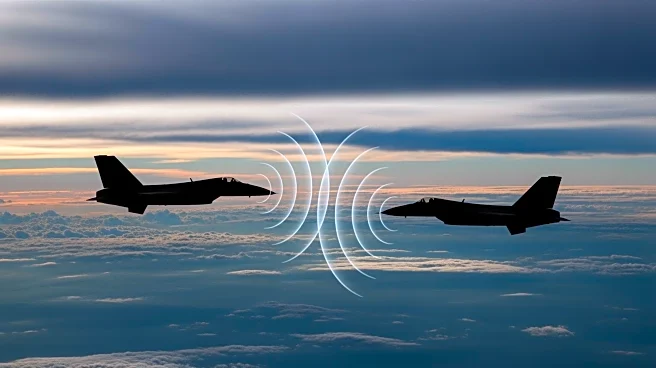
Chinese fighter jets, operating from the aircraft carrier CNS Liaoning, reportedly locked their radars on Japanese Air Self-Defense Force units near Japan's territory. This incident, described by Japan's Defense Minister
Shinjiro Koizumi as a dangerous act, occurred over international waters southeast of Okinawa Island. The radar lock-on was seen as an escalation in the already tense relations between China and Japan, following Japan's remarks about potential military intervention in a Chinese blockade of Taiwan. The Chinese Defense Ministry accused Japan of intruding into its exercise zones, while Japan lodged a strong protest against the radar lock-on.
Why It's Important?
This incident highlights the growing military tensions in East Asia, particularly between China and Japan, two major regional powers. The radar lock-on is a significant escalation that could lead to further diplomatic and military confrontations. It underscores the strategic importance of the region, especially concerning Taiwan, which is a critical point of contention. The situation could impact U.S. interests, as Japan is a key ally, and any conflict in the region could draw in the United States, affecting global security and economic stability.
What's Next?
Japan is expected to continue monitoring the Chinese naval task group as it approaches its main islands. The potential for further military encounters remains high, and diplomatic efforts may intensify to prevent escalation. Both countries may engage in more robust military posturing, and the international community will likely watch closely for any developments that could lead to broader regional instability.