


What's Happening?
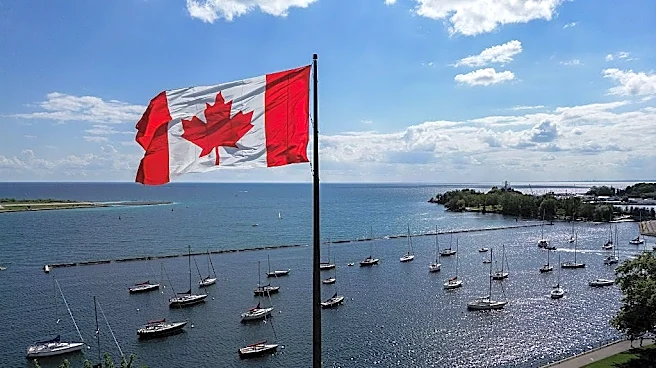
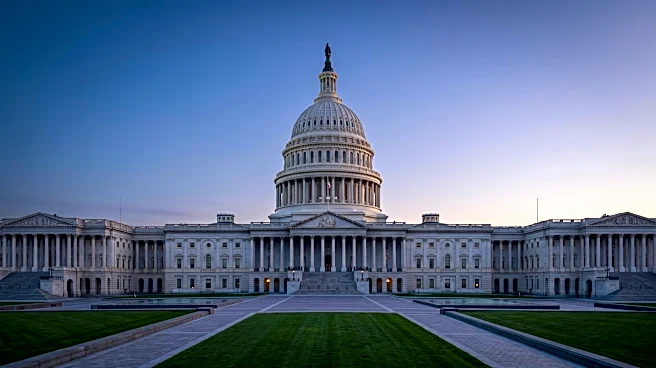
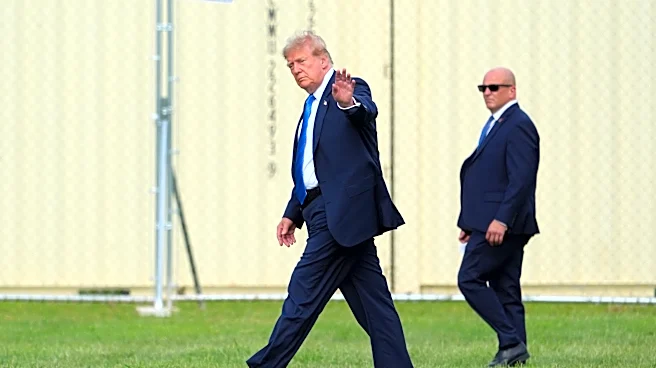
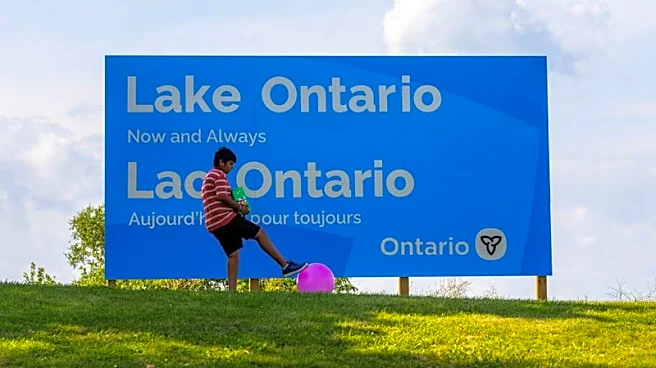
U.S. Representatives Tim Kennedy (D-NY), Joe Morelle (D-NY), and Debbie Dingell (D-MI) have introduced the 'Hands Off Our Great Lakes Act' in response to President Trump's executive order renaming Lake Ontario to 'Lake America'. The proposed legislation
aims to reverse this name change and prevent any future renaming of the Great Lakes by the federal government. The bill specifically seeks to nullify Executive Order 14422 and block federal funds from being used to implement or support such a name change. Representative Kennedy, whose district borders Canada, emphasized that the renaming is a 'distraction' from economic issues and an 'unserious, unacceptable attempt' to undermine the relationship between the U.S. and Canada. The move follows Google's renaming of Lake Ontario to 'Lake America' on its Maps app for American users, and reports that President Trump had approached Apple to do the same.
Why It's Important?
This legislative action highlights a significant point of contention between the executive branch and members of Congress regarding presidential authority and the symbolic importance of shared natural resources. The Great Lakes, including Lake Ontario, represent a crucial economic and cultural link between the United States and Canada. The proposed renaming, viewed by some lawmakers as a 'childish, juvenile behavior' and a 'distraction,' could strain diplomatic relations with Canada, a key ally and trade partner. The bill's introduction underscores concerns about the potential impact of such actions on cross-border trade, as exemplified by the automotive industry where components cross the U.S.-Canada border multiple times during manufacturing. Furthermore, it raises questions about the appropriate use of executive power and the role of Congress in safeguarding national heritage and international relationships, particularly in an election year where economic policies and presidential conduct are under scrutiny.
What's Next?
The 'Hands Off Our Great Lakes Act' will now proceed through the legislative process in the House of Representatives. Its passage will depend on gaining bipartisan support, which Representative Kennedy acknowledged could be challenging given the current political climate and the Republican majority in the House. However, he expressed optimism that the upcoming elections could shift the balance of power, potentially leading to greater accountability for the Trump administration's actions. Should the bill pass both chambers of Congress, it would then require presidential assent, which is unlikely given President Trump's executive order. The debate surrounding this legislation is expected to continue, potentially influencing public discourse leading up to the elections and further highlighting the differing views on presidential authority and international relations.
Beyond the Headlines
Beyond the immediate political skirmish, this event touches upon deeper implications concerning national identity, environmental stewardship, and international cooperation. The Great Lakes are not merely geographical features but hold immense historical, ecological, and cultural significance for both the U.S. and Canada. Unilateral attempts to rename such shared landmarks can be perceived as disrespectful to this shared heritage and could set a precedent for similar actions regarding other binational resources. The controversy also underscores the growing influence of technology companies like Google and Apple in shaping public perception and information, as their mapping services can quickly disseminate and normalize such name changes. This incident prompts a broader discussion on the balance between nationalistic gestures and the preservation of long-standing international relationships and shared natural treasures.