




What's Happening?
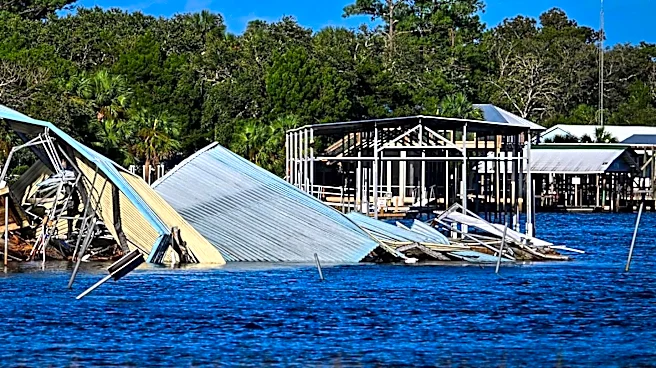
The Federal Emergency Management Agency (FEMA) has allocated nearly $33 million to South Carolina to aid in recovery efforts following Hurricane Helene and other recent disasters. This funding is part of a larger national initiative by FEMA, which has announced
over $348 million for approximately 170 projects across the country. In South Carolina, more than $32 million will be directed towards six Public Assistance projects, covering costs associated with emergency protective measures, debris removal, and utility repairs, particularly in the Aiken area. Specific projects include $30.7 million for Greenville Water to repair reservoirs, and smaller amounts for Aiken County debris removal, Aiken Electric Cooperative for protective measures, the city of Seneca for protective measures, and Clemson University for campus fencing repairs. Additionally, $685,200 has been awarded through the Hazard Mitigation Grant Program to support South Carolina's 2028 state hazard mitigation planning efforts.
Why It's Important?
This significant FEMA funding is crucial for South Carolina's recovery and future resilience. The nearly $33 million will directly support the rebuilding of critical infrastructure, including water systems and utilities, which are essential for public health and economic activity. By reimbursing costs for debris removal and emergency protective measures, the funding helps alleviate the financial burden on local governments and communities, allowing them to recover more quickly. The allocation for hazard mitigation planning is particularly important, as it aims to reduce the impact of future disasters, potentially saving lives and billions in damages. This investment underscores the federal government's role in disaster response and long-term recovery, highlighting the economic and social costs of extreme weather events and the necessity of proactive measures to protect communities and infrastructure from climate-related threats.
What's Next?
The allocated FEMA funds will now be disbursed to the identified projects and entities within South Carolina. Greenville Water will proceed with repairs to the North Saluda and Table Rock reservoirs, while Aiken County, Aiken Electric Cooperative, the city of Seneca, and Clemson University will implement their respective recovery and protective measures. The state will also begin utilizing the Hazard Mitigation Grant Program funds to advance its 2028 hazard mitigation planning efforts, focusing on strategies to reduce vulnerability to future disasters. These projects will likely involve detailed planning, procurement, and construction phases. The progress of these recovery efforts will be closely monitored by state and federal agencies to ensure efficient and effective use of the funds, with a focus on restoring normalcy and enhancing resilience across the affected communities.
Beyond the Headlines
The FEMA funding for South Carolina's hurricane recovery extends beyond immediate repairs, touching upon broader themes of climate adaptation and community resilience. The investment in hazard mitigation planning reflects a growing recognition of the need to move beyond reactive disaster response to proactive risk reduction. This approach is vital as climate change continues to increase the frequency and intensity of extreme weather events, making coastal states like South Carolina particularly vulnerable. The funding also highlights the complex interplay between federal, state, and local governments in managing disaster recovery and preparedness. It underscores the importance of robust public infrastructure and the continuous need for investment to protect communities and economies from environmental threats. This situation serves as a case study for how federal aid can be strategically deployed to not only rebuild but also to fortify communities against future climate impacts.