
What's Happening?
The United States Department of Agriculture (USDA) is integrating Artificial Intelligence (AI) to improve the accuracy of its agricultural production reports. This technological adoption aims to detect
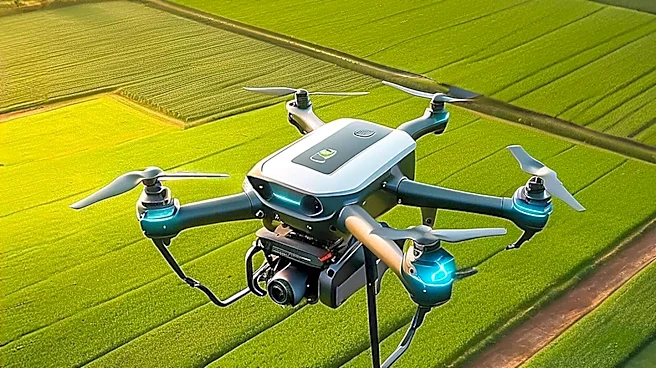
crop data errors, thereby enhancing the reliability of crucial agricultural information. This development is part of a broader trend in the food and agriculture sector, which is seeing increased innovation to address emerging challenges. Other initiatives include farmers using drones for efficient cover crop seeding to support sustainable practices and the Food and Agriculture Organization (FAO) launching its first Global Pollinator Conference to strengthen international efforts for pollinator protection and global food security. These efforts collectively aim to build resilience within food systems, which are currently facing systemic risks and potential disruptions from supply chain issues and climate change.
Why It's Important?
The USDA's adoption of AI for data accuracy is critical for informed decision-making across the agricultural sector. Reliable agricultural production reports are essential for policymakers, farmers, and businesses to understand market trends, plan for future harvests, and mitigate risks. Inaccurate data can lead to inefficient resource allocation, market volatility, and ultimately, impact food security. The broader context of innovation, including drone technology for sustainable farming and global efforts to protect pollinators, underscores the urgent need to adapt to climate change and ensure the long-term viability of food systems. These advancements are vital for maintaining food industry resilience, especially as businesses face increasing vulnerability to supply chain disruptions and environmental challenges.
What's Next?
The integration of AI into USDA's data analysis is likely to lead to more precise agricultural forecasts and better-informed policy decisions. This could result in more stable food prices, improved resource management, and enhanced food security for the nation. The continued adoption of technologies like drones in farming suggests a future where agricultural practices are more efficient and environmentally sustainable. Furthermore, international collaborations, such as the FAO's pollinator conference, indicate a growing recognition of interconnected global challenges and the need for coordinated efforts to protect biodiversity crucial for food production. These trends suggest a proactive approach to building a more robust and resilient food system capable of withstanding future shocks.
Beyond the Headlines
The move towards AI in agriculture signifies a deeper shift in how food systems are managed, moving from traditional methods to data-driven, technologically advanced approaches. This evolution has implications for labor markets, requiring new skills and potentially reshaping the agricultural workforce. Ethical considerations around data privacy and the equitable distribution of technological benefits will also become more prominent. The focus on pollinators and sustainable farming practices highlights a growing awareness of ecological interdependence and the need to balance agricultural productivity with environmental stewardship. Ultimately, these innovations are not just about efficiency but about fundamentally rethinking humanity's relationship with food production and the natural world to ensure long-term planetary health and human well-being.