
What's Happening?
Researchers have observed a thriving population of polar bears in the Svalbard archipelago, despite ongoing concerns about climate change and melting sea ice. Jon Aars, a senior scientist with the Norwegian
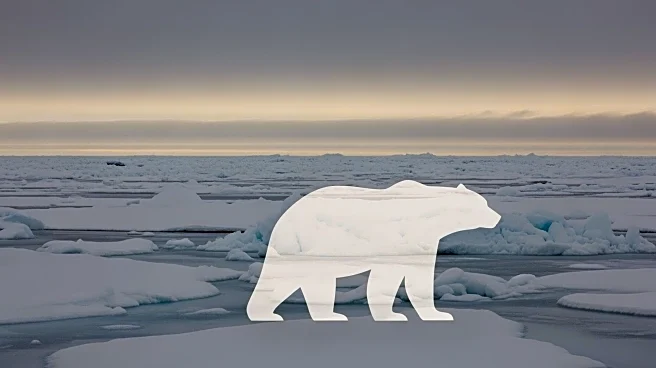
Polar Institute, has been studying these bears for over two decades. His team tracked nearly 800 bears from 1992 to 2019, finding them in good health and capable of raising new cubs. This discovery is surprising given the significant loss of sea ice, which is crucial for polar bears as a hunting platform for seals. The bears appear to be adapting to smaller ice patches, which may help them hunt more efficiently as their prey becomes concentrated in these areas. Additionally, the bears are increasingly foraging on land, consuming other prey like reindeer and walruses.
Why It's Important?
The findings offer a rare piece of positive news in the context of climate change, suggesting that polar bears may be more adaptable than previously thought. This adaptability could have significant implications for conservation strategies, as it indicates that polar bears might survive longer in a warming Arctic than expected. However, the research also highlights the need for continued monitoring, as the long-term effects of climate change remain uncertain. The thriving bear population in Svalbard could provide insights into how other polar bear populations might adapt, but it also underscores the urgency of addressing climate change to preserve their habitats.
What's Next?
Further research is necessary to understand how polar bears in other regions of the Arctic are coping with climate change. Scientists are concerned that the current gains observed in Svalbard may be temporary, as predictions indicate a rapid loss of sea ice in the area. Continued monitoring and research will be crucial to assess the long-term viability of polar bear populations and to develop effective conservation strategies. The findings may also prompt discussions among policymakers and environmental groups about the best approaches to mitigate the impacts of climate change on Arctic wildlife.
Beyond the Headlines
The adaptation of polar bears in Svalbard raises questions about the resilience of other Arctic species facing similar environmental changes. It also highlights the complex interplay between climate change and wildlife adaptation, suggesting that some species may find unexpected ways to survive. This could lead to a reevaluation of conservation priorities and strategies, emphasizing the importance of flexible and adaptive management approaches in the face of climate change.