





What's Happening?
Greenland's Inatsisartut (Parliament) has approved a trilateral security agreement with Denmark and the United States by a vote of 16 to none, with seven abstentions. This vote marks a significant political turning point, endorsing a deal that allows
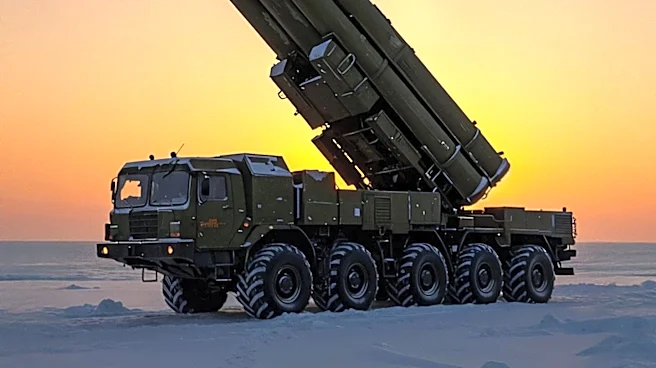
for an expanded American military presence in the Arctic. The agreement permits the U.S. to modernize and expand activities at Pituffik Space Base and establish new defense areas at Narsarsuaq and Mestersvig. It also supports missile-defense infrastructure and streamlines approval for certain unmanned military installations. While Greenland's parliamentary stage is complete, the agreement still requires ratification by Denmark's Folketing, with a final vote anticipated on November 19. The deal aims to reconcile U.S. security priorities with Denmark's constitutional role and Greenland's political aspirations for self-determination, ensuring the provisions remain valid even if Greenland eventually becomes independent. This development follows months of debate and pressure regarding Greenland's strategic future in the North Atlantic.
Why It's Important?
This security agreement is crucial for U.S. strategic interests in the Arctic, a region of increasing geopolitical importance. The expanded military presence allows the U.S. to strengthen its defense capabilities and surveillance in the North Atlantic, particularly in response to growing activities by other global powers. For Greenland, the agreement reaffirms its right to self-determination while maintaining Danish sovereignty, creating a delicate balance. The deal's provisions are designed to endure even if Greenland achieves independence, making it an active participant in a security framework that will influence its future status. Economically, the agreement states that contracts linked to defense areas should prioritize Greenlandic businesses, which could bring local employment, training, and infrastructure gains. However, critics have raised concerns about the direct economic benefits for Greenland in exchange for a larger foreign military footprint, suggesting that the actual impact will depend on the specifics of implementation.
What's Next?
The next formal milestone for the agreement is Denmark's parliamentary vote in the Folketing, expected on November 19. If approved, the focus will shift to the implementation phase, particularly regarding the economic benefits for Greenland. The agreement's success in strengthening Nuuk's bargaining power will depend on whether it delivers credible local benefits and meaningful Greenlandic influence over its execution. If strategic decisions and economic rewards are perceived to remain concentrated outside Greenland, it could intensify political arguments for greater Greenlandic control over its resources, territory, and international relationships. Additionally, Greenland is in the process of establishing its own foreign direct investment (FDI) screening bill, which will complement the security agreement by regulating foreign investments in sensitive sectors, further shaping the island's economic and security landscape.
Beyond the Headlines
The security agreement highlights the complex interplay between national security, sovereignty, and self-determination in the Arctic. While it addresses immediate security concerns for the U.S. and Denmark, it also underscores Greenland's evolving role on the international stage. The emphasis on Greenlandic self-determination within the agreement reflects a broader trend of indigenous populations seeking greater autonomy and control over their territories and resources. The economic dimension, particularly the debate over direct benefits versus strategic concessions, could set a precedent for future agreements involving resource-rich, strategically important regions. The agreement also implicitly acknowledges the increasing competition in the Arctic, where melting ice caps are opening new shipping routes and access to natural resources, making the region a critical area for global powers. The balance struck in this agreement could influence how other nations approach similar geopolitical challenges in the Arctic and beyond.