
What's Happening?
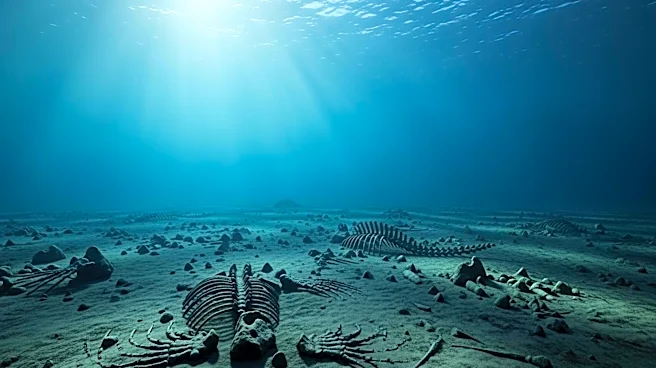
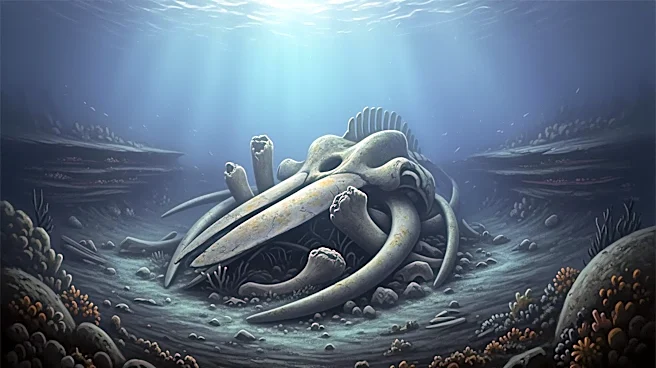
A team of researchers has discovered a vast collection of fossil whale bones in the southern Indian Ocean, at a depth of 7 kilometers. This 'whale necropolis' includes fossils up to 5 million years old
and a new species of extinct beaked whale. The discovery was made during the Global Hadal Exploration Programme, which aims to explore the deepest parts of the world's oceans. The site, located in the Diamantina Zone, contains up to 760 individual whales per square kilometer, providing a unique archive of deep-sea life and evolution.
Why It's Important?
The discovery of this deep-ocean 'necropolis' offers significant insights into marine biology and the history of whale species. It provides a rare opportunity to study the evolution of marine life and the ecological dynamics of deep-sea environments. The findings could enhance our understanding of how marine ecosystems have adapted to extreme conditions over millions of years. Additionally, the discovery underscores the importance of deep-sea exploration in uncovering the mysteries of Earth's oceans, which remain largely unexplored and hold potential for new scientific breakthroughs.