





What's Happening?
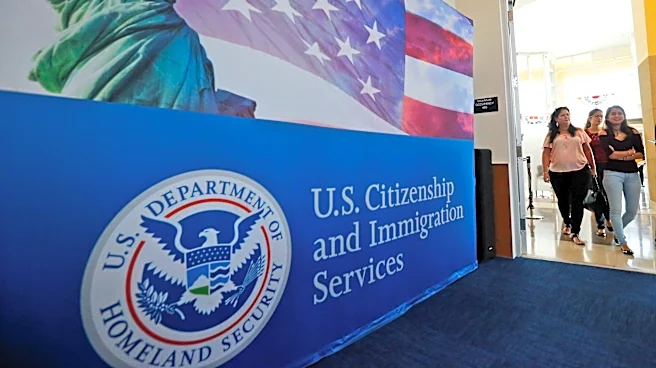
Senate Republicans have successfully passed the Secure America Act (S.2), a narrow immigration enforcement bill, which allocates $69.5 billion to the Department of Homeland Security (DHS) and the Department of Justice (DOJ). This bill aims to ensure that
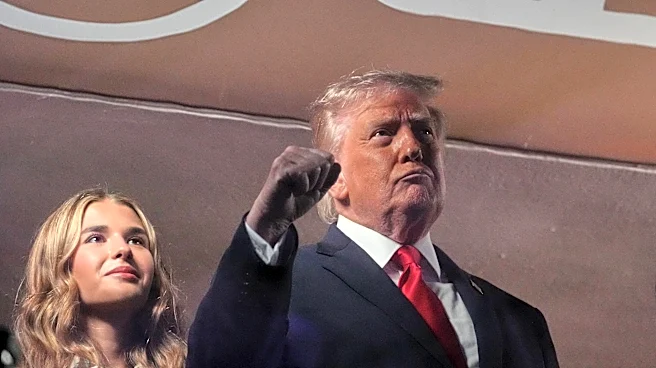
the Trump administration has sufficient funds for immigration enforcement for the remainder of President Trump's second term. The bill was passed using a procedural maneuver known as budget reconciliation, allowing it to bypass the need for Democratic support. The Secure America Act passed the Senate with a final vote of 52-47 and was subsequently approved by the House of Representatives. This legislative move follows a prolonged shutdown of the DHS, which lasted 76 days, marking the longest agency shutdown in U.S. history. The shutdown was a result of Democratic demands for immigration enforcement reforms, which were not met by the Trump administration and Senate Republicans.
Why It's Important?
The passage of the Secure America Act is significant as it highlights the ongoing partisan divide over immigration policy in the United States. By securing funding for immigration enforcement, the bill supports the Trump administration's agenda to strengthen border security and immigration control. However, the use of budget reconciliation to pass the bill without bipartisan support underscores the contentious nature of immigration policy debates. The bill's passage may lead to increased enforcement actions, affecting immigrant communities and potentially leading to further legal and social challenges. Additionally, the prolonged DHS shutdown and the subsequent legislative maneuvering reflect broader political dynamics and the challenges of achieving consensus on immigration reform.
What's Next?
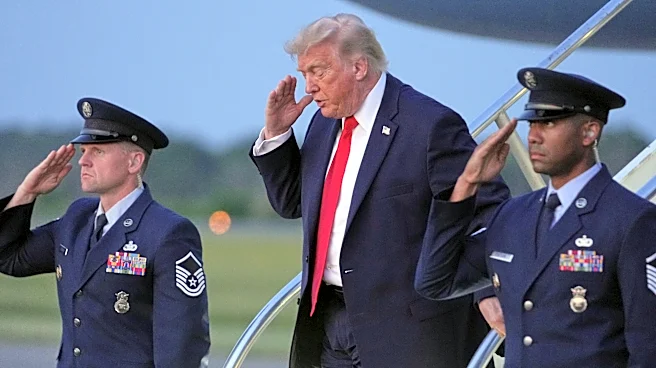
The Secure America Act now awaits President Trump's approval, which is expected to be granted, ensuring funding for immigration enforcement for the next three years. Following this legislative success, Republican lawmakers are planning to pursue a third reconciliation bill in the 119th Congress. Discussions are already underway regarding the contents of this future bill, which may address other aspects of immigration policy or related issues. The continued use of reconciliation to pass significant legislation without bipartisan support may further polarize the political landscape and impact future legislative negotiations.