







What's Happening?
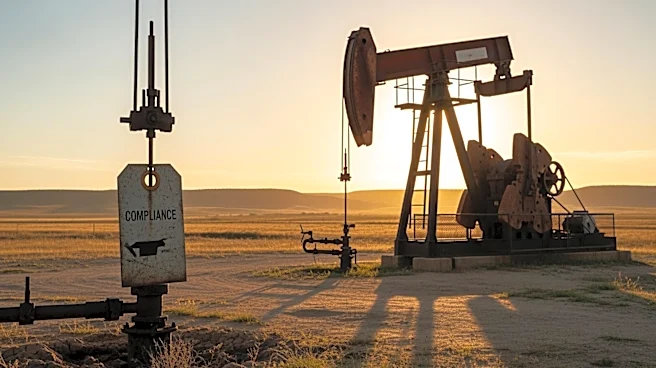
In Tom Green County, Texas, landowner Jackie Chesnutt is embroiled in a dispute over the operation of low-producing oil wells on her property. Chesnutt claims that the wells, operated by CORE Petro, are out of compliance with state regulations and should
be shut down. CORE Petro, however, argues that the wells are compliant and that they are struggling financially to maintain operations. The issue highlights a broader problem in Texas, where many oil wells produce minimal amounts of oil, leading to potential pollution and burdensome equipment for landowners. The Railroad Commission of Texas, which regulates oil and gas, has not issued fines to CORE Petro despite Chesnutt's complaints. Chesnutt has taken matters into her own hands by shutting off power to the wells, leading to confrontations with CORE Petro and commission staff.
Why It's Important?
The situation underscores the challenges faced by landowners in Texas due to the prevalence of low-producing oil wells. These wells often remain active to avoid the costly process of plugging, which can lead to environmental concerns and disputes over land use. The issue is significant as Texas has a large number of inactive and orphan wells, which pose environmental risks and financial burdens on the state. The conflict between Chesnutt and CORE Petro reflects the need for stricter regulations and enforcement to ensure that oil companies are held accountable for their operations. The broader implications include potential reforms in the oil and gas industry to address the backlog of orphan wells and improve compliance with environmental standards.
What's Next?
The Railroad Commission of Texas is developing new rules for inactive wells following recent legislative changes. These rules aim to address the backlog of orphan wells and ensure timely plugging of inactive wells. Additionally, the Texas Commission on Environmental Quality is preparing to issue grants for plugging marginal wells to reduce methane emissions. These initiatives could provide financial assistance to companies like CORE Petro, enabling them to plug wells that might otherwise become orphaned. The ongoing dispute between Chesnutt and CORE Petro may continue to draw attention to the need for regulatory reform and increased oversight in the oil and gas industry.
Beyond the Headlines
The conflict between landowners and oil companies in Texas highlights ethical and environmental concerns related to the oil and gas industry. The practice of maintaining minimal production to avoid plugging costs raises questions about corporate responsibility and environmental stewardship. The situation also reflects broader cultural and legal challenges in balancing economic interests with environmental protection. As Texas grapples with the legacy of its oil industry, the need for sustainable practices and accountability becomes increasingly urgent.