






What's Happening?
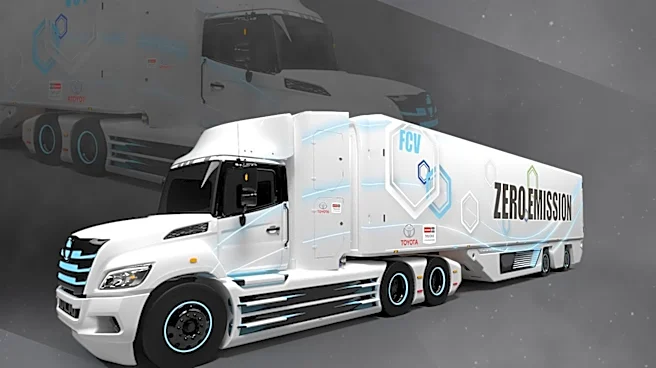
Lee Zeldin, the Administrator of the Environmental Protection Agency (EPA), has proposed rolling back Biden-era emission requirements for heavy-duty vehicles. This initiative is part of a broader effort to address gasoline prices and modify environmental
regulations. Zeldin claims that these changes would result in significant savings for truckers, estimating up to $12 billion. In addition to this, Zeldin announced the Systematic Targeting of Microplastics (STOMP) program. The STOMP program is designed to measure, target, and ultimately remove microplastics from the human body. Zeldin has also been associated with the Trump administration, as evidenced by a photograph with President Trump and other officials. His political background includes a close contest against Kathy Hochul in the 2022 New York gubernatorial election.
Why It's Important?
The proposed rollback of emission requirements for heavy-duty vehicles by EPA Administrator Lee Zeldin carries significant implications for the U.S. transportation industry and environmental policy. If implemented, the estimated $12 billion in savings for truckers could alleviate financial pressures on a sector critical to the nation's supply chain and economy. This move could be seen as a shift in regulatory philosophy, prioritizing economic relief and industry interests over stricter environmental controls. Conversely, environmental groups and public health advocates may raise concerns about the potential increase in air pollution and its long-term health impacts. The STOMP program, aimed at addressing microplastics, highlights a growing awareness of emerging environmental health threats and could lead to new research and public health initiatives. Zeldin's actions reflect a broader political dynamic, where regulatory decisions often balance economic considerations with environmental protection, impacting various stakeholders from consumers to large corporations.
What's Next?
Following EPA Administrator Lee Zeldin's proposal to roll back Biden-era emission requirements for heavy-duty vehicles, the next steps will likely involve a period of public comment and review. Stakeholders, including trucking associations, environmental organizations, and public health advocates, are expected to submit their feedback, which the EPA will consider before making a final decision. The implementation of the Systematic Targeting of Microplastics (STOMP) program will likely proceed with initial phases focused on research, measurement methodologies, and pilot projects to identify effective strategies for microplastic removal. Politically, this move could face challenges from environmental groups and potentially from states with stricter emission standards, leading to legal battles or legislative efforts to counter the rollback. The outcome of these regulatory changes will influence future policy directions regarding environmental protection and economic incentives for industries, potentially setting precedents for other sectors.
Beyond the Headlines
The EPA's proposed rollback of emission requirements, alongside the introduction of the STOMP program, underscores a complex interplay between economic policy, environmental regulation, and public health in the U.S. The debate over heavy-duty vehicle emissions touches upon the ethical considerations of balancing industrial costs against environmental degradation and public health. While the promise of $12 billion in savings for truckers could stimulate economic activity, it also raises questions about the long-term societal costs associated with increased pollution, such as healthcare expenses and reduced quality of life. The STOMP program, on the other hand, highlights a proactive approach to a relatively new environmental challenge, microplastics, which have pervasive and poorly understood impacts on human health and ecosystems. This initiative could catalyze significant scientific research and technological innovation in environmental remediation. These developments reflect a broader societal tension between immediate economic benefits and sustainable environmental practices, shaping the future of regulatory frameworks and public discourse on environmental stewardship.