







What's Happening?
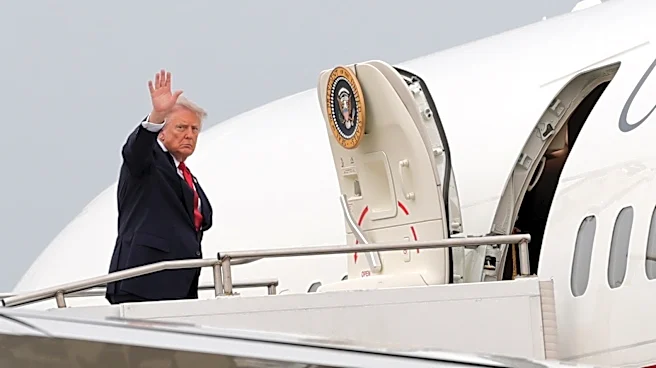
President Trump has announced plans for a retaliatory strike against Iran following an unsuccessful attempt by the Iranian regime to attack U.S. troops. This development comes amidst heightened tensions between the two nations. The announcement was made
during a segment on NBC Nightly News, where various significant events were discussed, including Dr. Anthony Fauci's refusal to answer questions during a pandemic-related hearing and a historic 'Concert for Peace' featuring Pope Leo XIV. The attempted attack by Iran marks a continuation of strained relations, with President Trump emphasizing a strong response to protect U.S. interests and personnel abroad.
Why It's Important?
The potential for a retaliatory strike by the U.S. against Iran could escalate tensions in the Middle East, impacting global political stability and economic markets. Such actions may lead to increased military engagement, affecting international relations and potentially disrupting oil supplies, which could have a ripple effect on global economies. The U.S. military and diplomatic strategies in the region may face scrutiny, influencing future foreign policy decisions. Stakeholders, including military personnel, government officials, and international allies, are closely monitoring the situation for further developments.
What's Next?
The international community is likely to respond to President Trump's announcement with calls for restraint and diplomatic solutions. The U.S. government may engage in discussions with allies to coordinate a response, while Iran's reaction could determine the next steps in this geopolitical conflict. Observers anticipate potential diplomatic interventions to prevent further escalation, with possible implications for future negotiations on nuclear agreements and regional security.