



What's Happening?
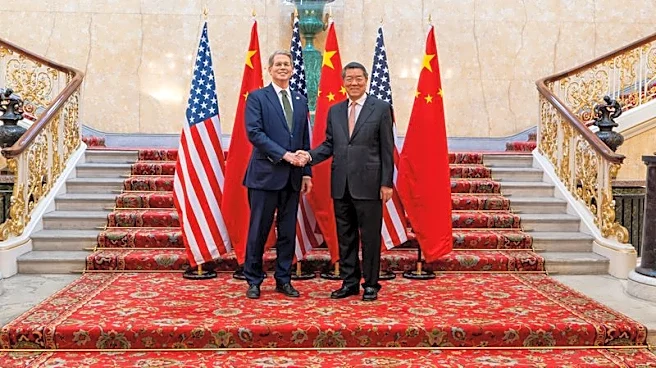
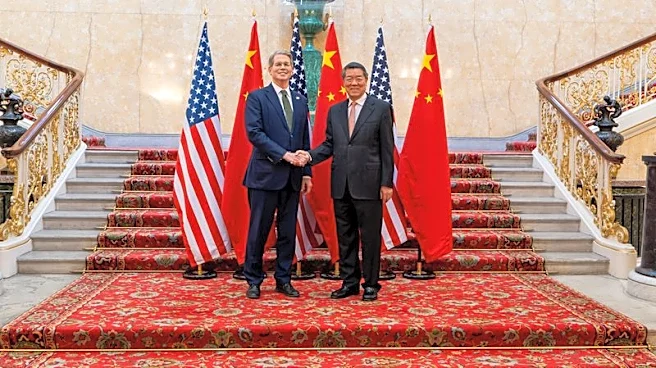
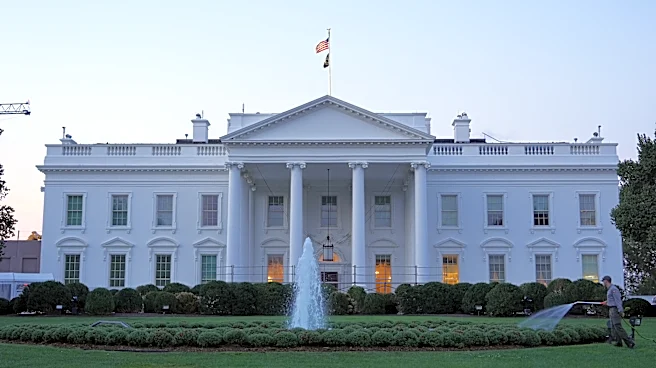
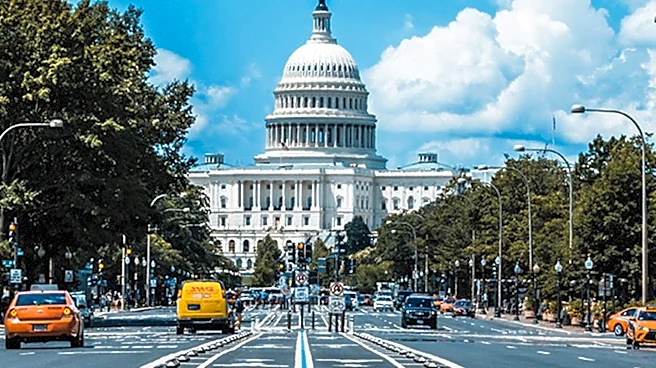
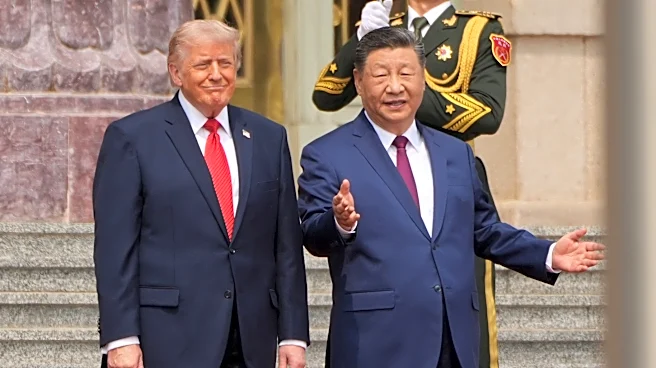
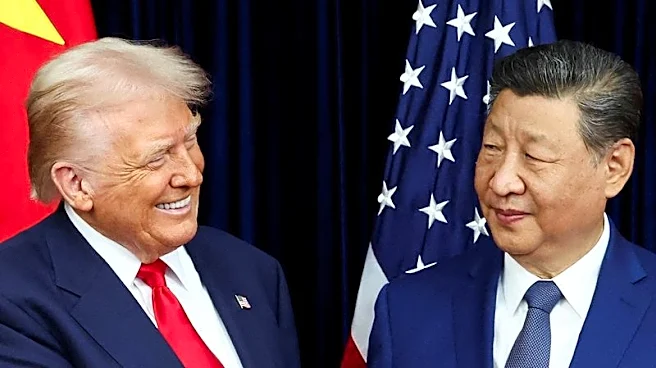
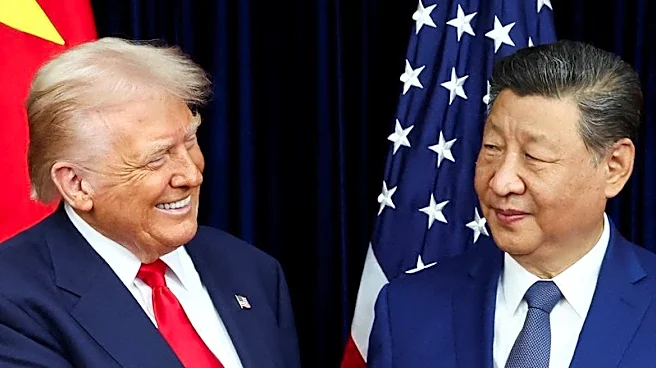
Chinese President Xi Jinping is scheduled to pay a state visit to the United States from Wednesday to Friday. This trip marks his first state visit to Washington since 2015 and his second in-person meeting with President Trump this year. The visit aims
to stabilize the relationship between the world's two largest economies, which has been strained by ongoing disputes concerning trade, technology, and national security. Chinese foreign ministry spokesman Guo Jiakun stated that President Xi would engage in an in-depth exchange of views with President Trump on significant issues impacting bilateral ties and global peace and developments. The exchange of visits by the two presidents within a six-month period is considered a historic milestone, underscoring the importance of head-of-state diplomacy in Sino-U.S. relations. The discussions are expected to cover a range of contentious topics, reflecting the complex nature of the relationship.
Why It's Important?
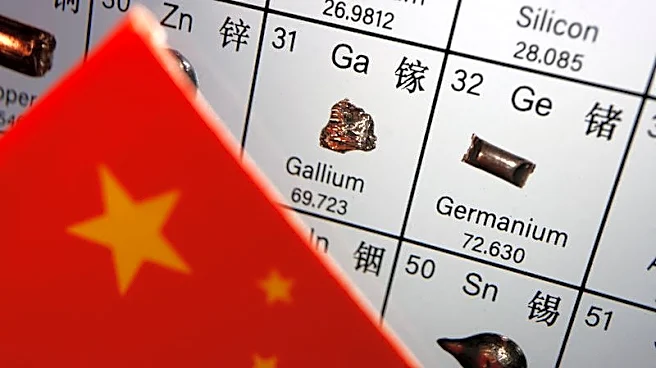
This state visit is crucial for de-escalating tensions and fostering dialogue between the U.S. and China, whose relationship significantly influences global economic stability and international politics. The two nations are deeply intertwined through trade, and any disruptions can have far-reaching consequences for global supply chains, financial markets, and economic growth. For U.S. industries, particularly those in technology and manufacturing, the outcomes of these discussions could determine future market access, intellectual property protections, and tariff policies. A stable relationship could lead to more predictable trade environments, benefiting businesses and consumers. Conversely, continued friction could result in increased tariffs, trade barriers, and a more fragmented global economy. The talks also bear importance for national security, as both countries are major military powers with significant geopolitical influence. Addressing areas of disagreement could prevent potential conflicts and promote cooperation on global challenges.
What's Next?
Following President Xi's state visit, the immediate next steps will likely involve detailed negotiations between U.S. and Chinese officials based on the directives and agreements made during the presidential meetings. Both sides will be looking to translate any high-level understandings into concrete policy changes, particularly in areas such as trade tariffs, technology transfer regulations, and intellectual property rights. Reactions from major stakeholders, including U.S. businesses, will be closely monitored, as they will be keen to understand the implications for their operations and market strategies. Political leaders in both countries will also be assessing the outcomes, potentially shaping future legislative agendas or diplomatic approaches. The visit could set the tone for future engagements, determining whether the relationship moves towards greater cooperation or continues on a path of competition and confrontation. Further high-level meetings or working group discussions may be scheduled to address specific issues in more detail.
Beyond the Headlines
Beyond the immediate policy implications, this state visit touches upon deeper ethical and cultural dimensions of the U.S.-China relationship. The ongoing trade and technology disputes often reflect differing economic philosophies and governance models, raising questions about fair competition, state-sponsored enterprises, and data privacy. The discussions could also influence global norms regarding technological development and intellectual property, potentially shaping international standards for innovation and digital governance. Culturally, the interactions between the two leaders and their delegations can subtly impact public perceptions and foster either greater understanding or deeper mistrust between the two societies. The long-term shifts triggered by these high-level engagements could redefine the global economic order, influencing the balance of power and the future of multilateral institutions. The visit serves as a critical juncture, with its outcomes potentially reverberating across various facets of international relations for years to come.