



What's Happening?
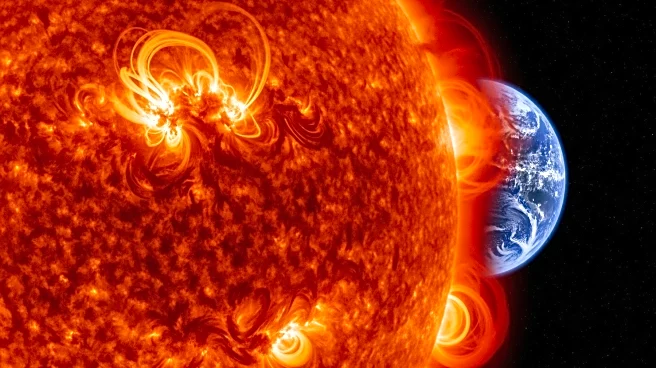
The National Oceanic and Atmospheric Administration (NOAA) has reported a strong X8.1 solar flare from Region 4366. The flare, which occurred at 6:57 pm ET, is associated with a coronal mass ejection that is expected to pass by Earth, potentially causing
minor geomagnetic disturbances. Region 4366 has been active, producing multiple M and X-class flares, and forecasters anticipate continued solar activity in the coming days.
Why It's Important?
Solar flares and associated coronal mass ejections can impact Earth's magnetosphere, potentially affecting satellite operations, communication systems, and power grids. Understanding and predicting solar activity is crucial for mitigating these impacts and ensuring the resilience of technological infrastructure. The report highlights the importance of space weather monitoring and preparedness in safeguarding critical systems.
What's Next?
NOAA will continue to monitor Region 4366 for further solar activity. Stakeholders, including satellite operators and power grid managers, may take precautionary measures to protect systems from potential disruptions. The situation underscores the need for ongoing research and investment in space weather forecasting capabilities.