





What's Happening?
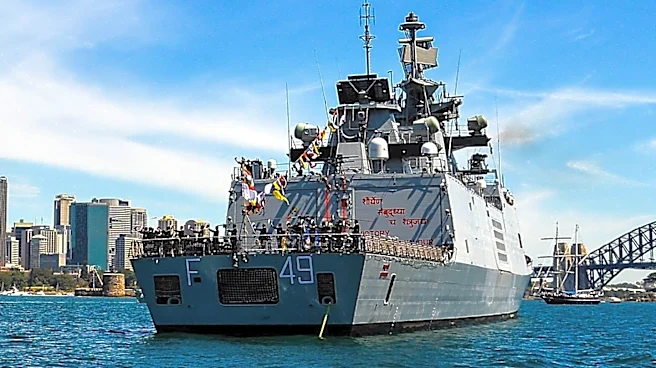
Georgia Governor Brian Kemp and Representative Tim Moore mistakenly used photos of Indian Navy frigates to celebrate the U.S. Navy's 251st birthday on October 13. Wall Street Journal editor Dave Brown identified the warships as Indian on X, highlighting
the error. The image used by both politicians is a 2008 U.S. Navy photo taken during the Malabar 2008 exercise in the Indian Ocean, featuring Indian Navy frigates INS Godavari, INS Brahmaputra, and INS Beas. Governor Kemp's post, which included the message 'we salute the sailors whose service, sacrifice, and courage carry that legacy forward' alongside a graphic reading 'Happy Birthday US Navy,' was later reported as 'not found' by X's data service on November 1, though an archived copy from October 15 preserves its text. Representative Moore also used the same image, adding a Department of the Navy seal and the words '251 Years' to his graphic. Neither Kemp nor Moore, nor their offices, have publicly responded to the flagging of their posts.
Why It's Important?
This incident highlights potential issues in public communication by elected officials, particularly concerning accuracy in digital content. The use of incorrect imagery, even if unintentional, can lead to public confusion and misrepresentation of national symbols or military assets. For the U.S. Navy, such errors, though minor, could inadvertently dilute the intended message of national pride and recognition for its service members. The quick identification and public flagging by a prominent journalist underscore the role of media in fact-checking public figures' statements and posts. The lack of response from the involved politicians also raises questions about accountability and transparency in correcting public errors. This event contributes to a broader pattern of similar mistakes by public figures in previous years, suggesting a recurring challenge in verifying visual content before public dissemination.
What's Next?
While no official response has been issued by Governor Kemp or Representative Moore, the incident may prompt increased scrutiny of social media posts from public officials. It could lead to internal reviews within their communication teams regarding content verification protocols. In the broader political landscape, similar errors in the past have sometimes led to apologies or clarifications, though none have been made in this instance. The ongoing public discussion on social media platforms like X may continue to draw attention to the importance of accuracy in official communications. This event might also serve as a reminder for other public figures to exercise greater diligence in their online messaging, especially when commemorating national events or institutions.
Beyond the Headlines
The repeated occurrence of politicians using incorrect military imagery for national celebrations points to a systemic issue in digital content management within political offices. This isn't merely an isolated gaffe but reflects a broader challenge in an era of rapid information dissemination and reliance on readily available, sometimes mislabeled, digital assets. The incident also touches upon the subtle complexities of international relations; while the U.S. and India share strong defense ties, misrepresenting Indian warships as American, even inadvertently, can be seen as a minor diplomatic faux pas. Furthermore, the public's quick identification and critique of such errors underscore a growing expectation for authenticity and accuracy from public figures, highlighting the constant pressure on politicians to maintain credibility in the digital sphere.