







What's Happening?
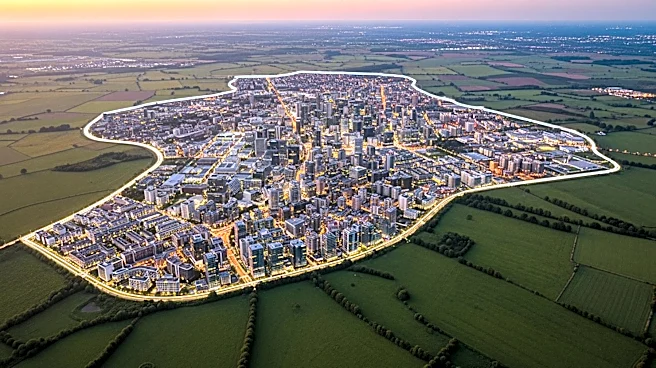
Oregon's urban growth boundaries (UGBs) are being highlighted as essential tools for managing housing shortages and economic development. The state's land use program, which includes UGBs, is designed to ensure a 20-year land supply for housing and industrial
development. This program helps direct public funding towards efficient infrastructure development and provides predictability for industries, including agriculture. Recent legislative updates, such as the Oregon Housing Needs Analysis, require cities to meet 20-year housing goals across various income categories. Cities with populations over 10,000 must inventory buildable residential land and implement strategies to address housing needs, including UGB expansions when necessary. The process for expanding UGBs is based on demonstrated need, and most proposals pass quickly, with a high approval rate. Despite the availability of land, infrastructure costs remain a limiting factor for development.
Why It's Important?
The importance of Oregon's urban growth boundaries lies in their ability to manage urban sprawl and protect agricultural lands, which are vital to the state's economy. By maintaining UGBs, Oregon can minimize infrastructure costs and plan strategically for housing and economic development. This approach helps attract desired types of development while mitigating adverse impacts on rural industries. The state's land use program is a critical tool for long-term economic growth, ensuring that development is sustainable and efficient. The recent legislative updates aim to address housing shortages by requiring cities to plan for future needs, which is crucial in a state experiencing economic slowdown and housing challenges.
What's Next?
Oregon will continue to update its land use laws every legislative session to address housing and economic development needs. The Oregon Housing Needs Analysis will provide an inventory of available land for housing, helping cities plan for future growth. The state may consider requiring an industrial lands inventory to further incentivize economic development. Addressing infrastructure funding gaps will be crucial for making land shovel-ready for development. As cities expand their UGBs based on demonstrated need, strategic state investment will be necessary to minimize infrastructure costs and support housing and industrial development.
Beyond the Headlines
The ethical and cultural dimensions of Oregon's urban growth boundaries involve balancing development with the preservation of agricultural lands. As cities expand, there is a risk of encroaching on valuable agricultural areas, which could harm one of the state's largest economic drivers. The land use program aims to protect these lands while accommodating urban growth. Additionally, the program's focus on planning for diverse housing needs reflects a commitment to social equity, ensuring that housing is accessible to all income levels. The long-term shifts triggered by this development approach could lead to more sustainable and inclusive communities.