


What's Happening?
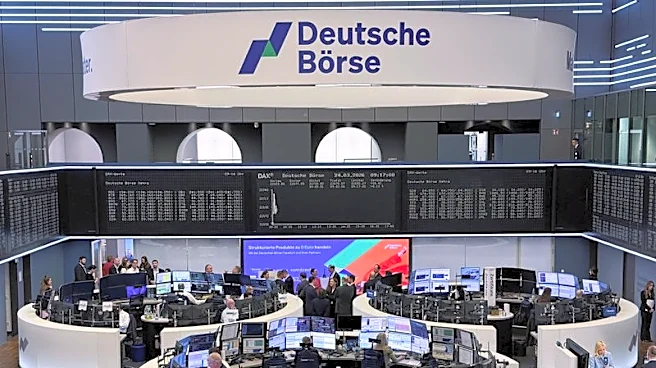
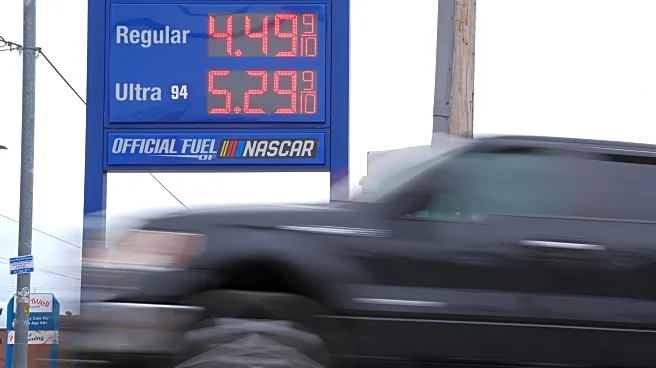
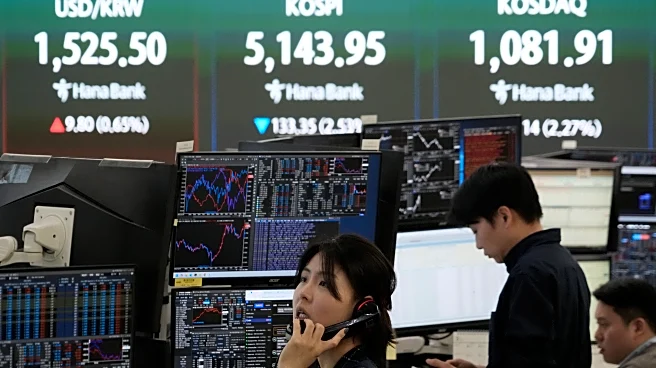
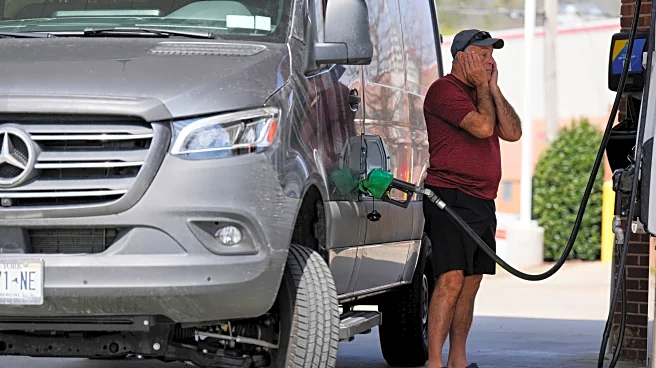
Gas prices in the United States have surged past $4 per gallon, reaching levels not seen since 2022. This increase is attributed to the ongoing conflict in Iran and the Middle East, which has disrupted supply chains and affected global oil prices. In
the tri-state area, prices are nearing $4, with New York and Connecticut averaging $3.95 per gallon and New Jersey slightly lower at $3.93. The rise in fuel costs is impacting consumer behavior, with many drivers opting to purchase less fuel or seek cheaper alternatives. The White House has indicated that prices are expected to drop once the conflict stabilizes.
Why It's Important?
The spike in gas prices has significant implications for the U.S. economy and consumer spending. Higher fuel costs can lead to increased prices for goods and services, as transportation and production costs rise. This can strain household budgets and potentially slow economic growth. The situation highlights the vulnerability of global oil markets to geopolitical tensions and the need for diversified energy sources. Policymakers may face pressure to address energy independence and explore alternative energy solutions to mitigate future disruptions.
What's Next?
As the conflict in the Middle East continues, gas prices are likely to remain volatile. The U.S. government may consider measures such as suspending the federal gas tax to provide temporary relief to consumers. Additionally, there may be increased advocacy for investment in renewable energy and infrastructure to reduce reliance on foreign oil. The outcome of the conflict and subsequent stabilization of oil markets will be critical in determining the trajectory of gas prices in the coming months.