


What's Happening?
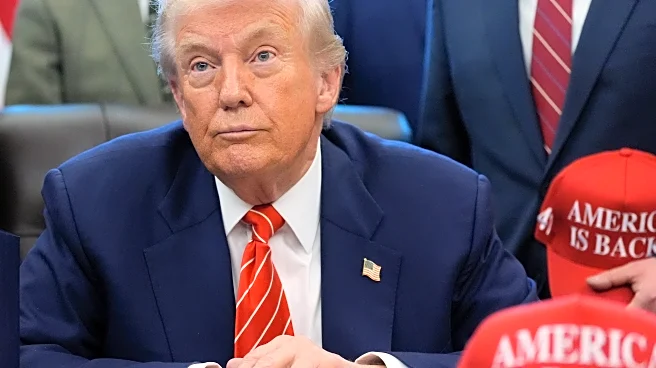
President Donald Trump celebrated the New Year at his Mar-a-Lago club in Palm Beach, Florida, where he auctioned off a portrait of Jesus for nearly $3 million. The auction was part of a New Year's event attended by various guests. President Trump announced
that half of the proceeds from the auction would be donated to St. Jude's Children's Hospital, a well-known institution dedicated to treating and curing pediatric catastrophic diseases. The remaining funds are set to benefit the local sheriff's department, supporting law enforcement efforts in the area. This event highlights President Trump's continued engagement in philanthropic activities, particularly those that support healthcare and law enforcement.
Why It's Important?
The auction of the painting by President Trump underscores his ongoing influence and ability to mobilize significant financial resources for charitable causes. By directing funds to St. Jude's Children's Hospital, the auction supports critical healthcare services for children facing severe illnesses, potentially improving outcomes for many young patients. Additionally, the contribution to the local sheriff's department reflects a commitment to bolstering law enforcement capabilities, which can enhance community safety and security. This dual focus on healthcare and law enforcement aligns with broader societal priorities, emphasizing the importance of supporting both public health and safety initiatives.
What's Next?
Following the auction, the funds will be allocated to the designated beneficiaries, with St. Jude's Children's Hospital likely using the donation to further its research and treatment programs. The local sheriff's department may utilize the funds to enhance operational capabilities, invest in new equipment, or support community policing efforts. The event may also inspire similar philanthropic activities, encouraging other high-profile individuals to leverage their influence for charitable purposes. Observers will be watching to see how these contributions impact the respective organizations and whether they lead to measurable improvements in healthcare and law enforcement outcomes.