







What's Happening?
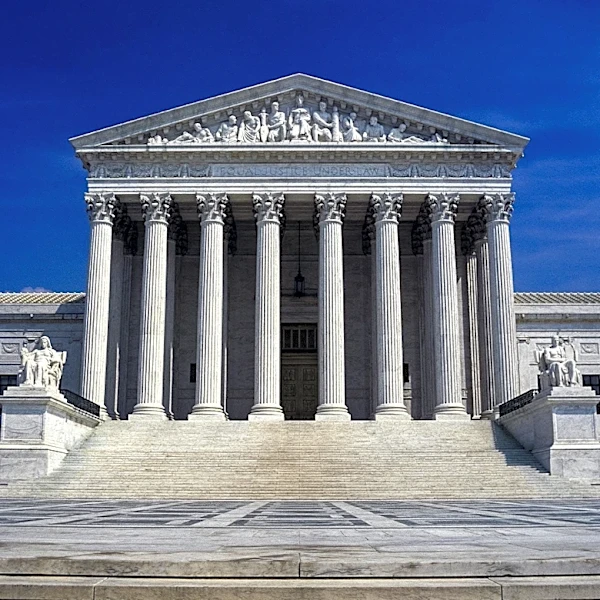
The Supreme Court has recently made significant rulings that reflect a conservative judicial philosophy, particularly affecting voting rights and gerrymandering. The Court's decision to interpret the Constitution's equality guarantee as a requirement
for a 'colorblind' approach has effectively weakened the 1965 Voting Rights Act, allowing states like Alabama to eliminate majority-Black districts. This move also reduces constraints on partisan gerrymandering, enabling political parties to shape electorates to their advantage. The Court's actions align with a broader constitutional project led by Chief Justice John Roberts, which aims to transform the First Amendment and recalibrate the balance of powers. These decisions are part of a long-term vision that prioritizes the power of those in authority, often at the expense of minority political influence.
Why It's Important?
These rulings have profound implications for American democracy, as they potentially undermine the electoral influence of racial minorities and entrench partisan power. By allowing gerrymandering and reducing protections for minority voting rights, the Court's decisions could lead to elections that are less representative of the populace. This shift may benefit established political parties and wealthy donors, who can exert greater influence over the political process. The Court's approach also raises questions about the future of democratic principles in the U.S., as it appears to prioritize the interests of those in power over broader democratic participation.
What's Next?
The implications of these rulings are likely to be felt in upcoming elections, as states may continue to redraw districts in ways that favor certain political parties. Civil rights groups and political organizations may challenge these changes in court, seeking to restore protections for minority voters. Additionally, the Court's decisions could prompt legislative efforts to address gerrymandering and voting rights at the federal level, though such efforts may face significant political hurdles.
Beyond the Headlines
The Court's rulings highlight a broader trend of judicial activism that seeks to reshape constitutional interpretations in ways that may not align with historical intentions. This approach raises ethical and legal questions about the role of the judiciary in shaping policy and the potential erosion of checks and balances in the U.S. government. The long-term impact of these decisions could redefine the relationship between the judiciary, the executive, and the legislative branches, as well as the role of money in politics.